
AI Automation in IT: Transforming Infrastructure and Security Operations
/What happens when IT systems can identify a problem, investigate it, and take action before a human ever opens a ticket?
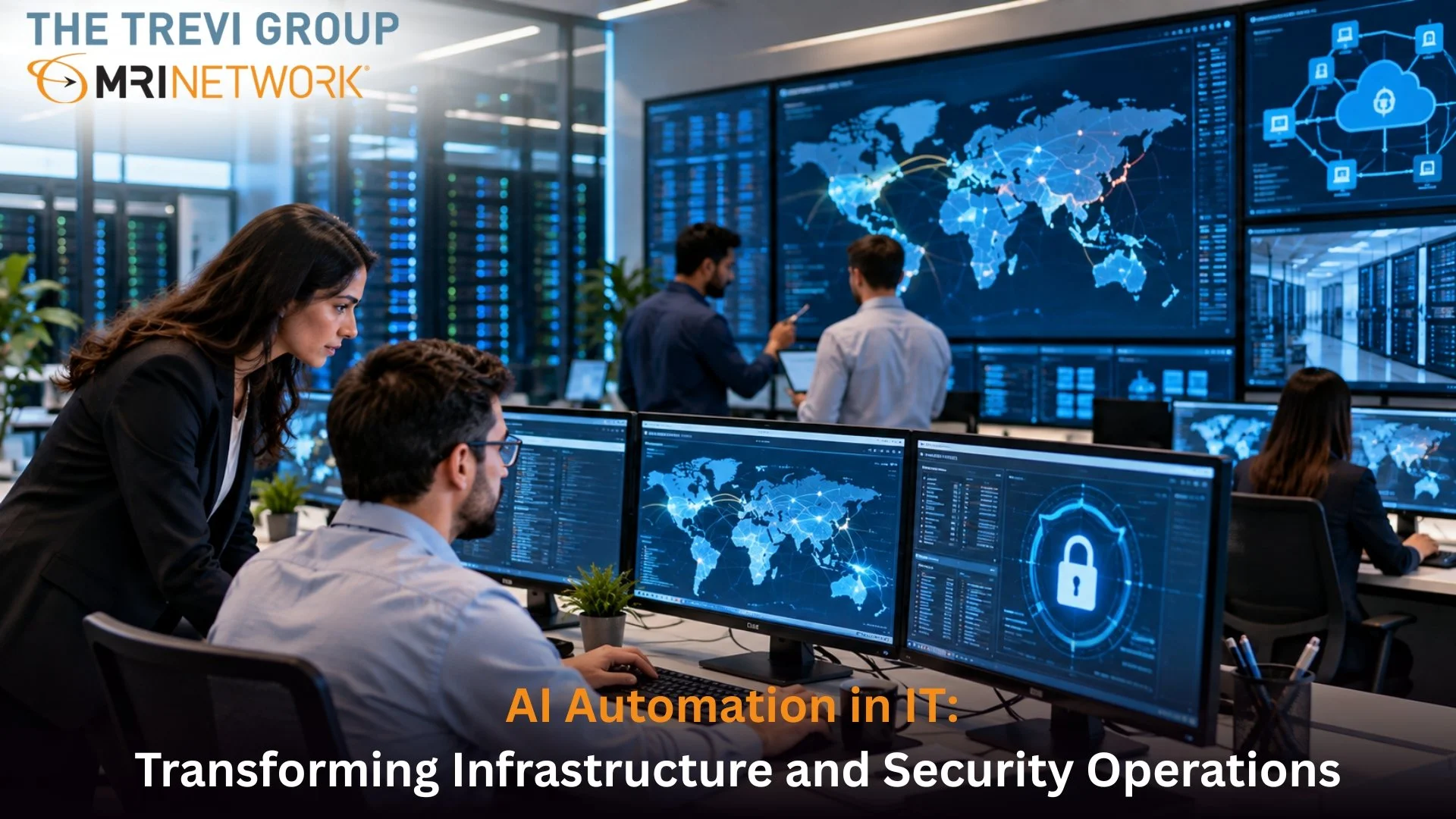
That is becoming a practical reality for enterprise technology teams. AI automation is moving beyond chatbots and productivity tools and into the core of IT operations, where it is being used to monitor infrastructure, investigate security threats, manage workloads, and support faster incident response.
For businesses, the opportunity is significant—but so is the responsibility that comes with giving software more autonomy.
From AIOps to Agentic IT
Enterprise IT environments have become too complex for teams to manually review every alert, system change, vulnerability, and performance issue.
New developments suggest the industry is moving toward what Cisco describes as AgenticOps, where AI systems can take action rather than simply recommend one.
Cisco reported on September 23 that more than half of surveyed enterprises had already moved to agentic AI systems operating in production, while 95% said their existing AIOps tools could not keep pace with current demands. The same research found that explainability remains an important requirement for organizations allowing AI agents to act autonomously.
This shift could change everyday IT work by automating tasks such as:
Alert investigation and prioritization
Infrastructure monitoring
Vulnerability analysis
Cloud operations
Incident response
Performance optimization
The goal is not simply to remove human involvement. It is to allow IT professionals to spend less time on repetitive investigation and more time on architecture, risk management, and complex problem-solving.
Security Must Move at the Same Speed
Automation also changes the cybersecurity equation.
AI agents can operate across applications, cloud environments, identities, and endpoints. That creates new opportunities for defenders—but also new attack surfaces.
CrowdStrike introduced Falcon Guardian in September to provide runtime visibility and enforcement for AI agents operating across enterprise environments. The company has also expanded its agentic security capabilities across endpoint, identity, SaaS, cloud, and network environments.
Cisco's latest Splunk developments similarly focus on AI-assisted threat hunting, investigation, detection engineering, coordinated response, and governance.
The implication for businesses is straightforward: securing AI can no longer be treated as a separate project after deployment. Identity, access controls, monitoring, data protection, and human oversight need to be considered throughout the AI lifecycle.
The Infrastructure Investment Is Getting Bigger
AI automation also has a financial dimension.
The demand for computing infrastructure continues to attract substantial investment. In September, Dell raised its annual revenue forecast to $192 billion, citing strong demand for AI-optimized servers. Reuters reported that Dell had received more than $130 billion in AI server orders over the preceding year.
AI infrastructure providers are attracting capital as well. Crusoe announced a $3.9 billion funding round in September, valuing the company at $30.9 billion as demand grows for specialized AI computing capacity.
For technology leaders and investors, these developments point to a broader reality: AI spending is affecting servers, networking, cloud infrastructure, cybersecurity, data centers, and enterprise software—not just AI model companies.
What It Means for IT Talent
As automation expands, the skills required inside IT organizations are evolving.
Companies will need professionals who understand the intersection of AI, cloud infrastructure, cybersecurity, automation, identity, governance, and enterprise systems.
That does not necessarily mean fewer IT professionals. Instead, responsibilities are shifting toward roles that require judgment, technical depth, security awareness, and the ability to manage increasingly autonomous systems.
For hiring managers, this creates an important challenge: finding talent that can work effectively alongside AI rather than simply operate traditional tools.
The Bigger Question
AI automation could make IT operations faster, more proactive, and more resilient. But greater autonomy also requires greater visibility, governance, and accountability.
For businesses considering their next technology investment, the question may no longer be whether AI will become part of IT operations. It may be how much autonomy an organization is prepared to give it—and how effectively its people, processes, and security controls can keep pace.
How is AI automation changing the way your organization approaches IT operations and cybersecurity?
The Trevi Group | “Executive Search for Technology Professionals” | www.TheTreviGroup.com
#thetrevigroup #aiautomation #informationtechnology #employmenttrends #hiringtrends #aisecurity #agenticai #AIops