Securing Network Infrastructure During Digital Expansion

Digital expansion in 2026 isn’t just about scaling fast; it’s about scaling smart. As businesses race to adopt cloud-native systems, AI-driven workflows, and remote-first operations, one thing becomes clear: your network is your backbone, and securing it is non-negotiable.

Why Security Can’t Be an Afterthought

Growth without security is like building a skyscraper on sand. Today’s cyber threats are more sophisticated, automated, and relentless. From ransomware-as-a-service to AI-powered phishing, attackers are evolving just as quickly as technology. Companies expanding digitally must embed security into their infrastructure from day one, not bolt it on later.

Zero Trust Is the New Standard

The old “trust but verify” model is officially outdated. In 2026, it’s all about Zero Trust Architecture (ZTA), where every user, device, and connection is continuously verified. No blind trust. No shortcuts. Whether your team is in-office, hybrid, or fully remote, Zero Trust ensures that access is always intentional and secure.

Key elements include:

  • Continuous identity verification

  • Least-privilege access control

  • Real-time monitoring and analytics

Cloud Expansion Needs Smarter Protection

As organizations move deeper into multi-cloud and hybrid environments, the attack surface expands. Misconfigurations, unsecured APIs, and shadow IT can quietly create vulnerabilities.

To stay ahead:

  • Use automated cloud security posture management (CSPM)

  • Encrypt data both at rest and in transit

  • Regularly audit configurations and permissions

AI Is Both a Threat and a Shield

Artificial intelligence is reshaping cybersecurity. While attackers use AI to launch smarter attacks, defenders are leveraging it for predictive threat detection and faster response times.

Smart businesses are:

  • Implementing AI-driven threat intelligence

  • Automating incident response

  • Using behavioral analytics to detect anomalies early

Human Factor Still Matters

Even with cutting-edge tech, people remain the weakest link and the strongest defense. A single click on a malicious link can compromise an entire network.

Build a security-first culture by:

  • Conducting regular awareness training

  • Simulating phishing attacks

  • Encouraging proactive reporting

Resilience Is the Real Goal

Security isn’t just about prevention; it’s about resilience. In a world where breaches are inevitable, how quickly you detect, respond, and recover defines your success.

Focus on:

  • Strong incident response plans

  • Regular backups and disaster recovery

  • Continuous security testing

Final Take

Digital expansion is exciting, but it comes with responsibility. The companies winning in 2026 aren’t just the fastest, they’re the most secure. By embedding security into every layer of your network infrastructure, you don’t just protect your business; you future-proof it.

Because in today’s hyper-connected world, trust is your biggest currency, and security is how you earn it. Contact The Trevi Group if you need help with these challenges.

The Trevi Group | “Executive Search for Technology Professionals” | www.TheTreviGroup.com

#thetrevigroup #recruitingtrends #informationtechnology #employmenttrends #jobmarket #hiringtrends #cybersecurity #networksecurity #zerotrust

Designing Scalable Enterprise Network Topologies

In 2026, enterprise networks are no longer just “infrastructure”; they’re living, adaptive ecosystems. With AI-driven operations, cloud-native workloads, and edge computing exploding in popularity, scalability isn’t optional; it’s survival. Designing a network topology today means building something that evolves as quickly as your business does.

Why Scalability Is the New Currency

Modern enterprises deal with unpredictable traffic, hybrid teams, and real-time applications. A rigid network becomes a bottleneck. A scalable topology, on the other hand, flexes with demand, supports rapid innovation, and maintains consistent performance even under pressure.

Core Principles of Scalable Network Design

 Modular Architecture Wins
Think Lego blocks, not monoliths. Breaking networks into modular segments allows teams to expand, upgrade, or troubleshoot without disrupting the entire system.

 Cloud-First, Not Cloud-Only
Hybrid and multi-cloud strategies dominate in 2026. Smart topologies seamlessly integrate on-prem, public cloud, and edge environments without latency spikes or security gaps.

 Automation Is Non-Negotiable
Manual network management is outdated. AI-powered automation handles provisioning, monitoring, and optimization in real time, reducing downtime and human error.

 Security by Design
Zero Trust is now the baseline. Every node, user, and device must be verified continuously. Scalable networks embed security into the topology itself, not as an afterthought.

Trending Topology Models in 2026

 Spine-Leaf Architecture
The go-to for data centers. It ensures low latency and high bandwidth, making it ideal for AI workloads and high-performance applications.

 Software-Defined Networking (SDN)
SDN separates control from hardware, enabling centralized, programmable networks that scale effortlessly.

 Edge-Enabled Topologies
With IoT and real-time analytics booming, processing data closer to the source reduces latency and boosts performance.

 Mesh Networks for Resilience
Mesh designs provide multiple data paths, ensuring uptime even if parts of the network fail.

Challenges You Can’t Ignore

Scaling isn’t just about adding capacity. It’s about maintaining visibility, controlling costs, and avoiding complexity overload. Poorly designed scaling can lead to fragmented systems and security vulnerabilities.

The Future Is Autonomous

The next wave is autonomous networking systems that self-heal, self-optimize, and predict issues before they happen. Enterprises that adopt intelligent, scalable topologies today will lead tomorrow’s digital economy.

Final Thought

A scalable network isn’t just a technical upgrade; it’s a business strategy. Design it right, and you unlock speed, resilience, and innovation at scale. Ignore it, and you risk falling behind in a world that doesn’t wait. Contact The Trevi Group if you need help designing and implementing a scalable network.

The Trevi Group | “Executive Search for Technology Professionals” | www.TheTreviGroup.com

#thetrevigroup #informationtechnology #networkarchitecture #networkdesign #networkengineer #networkengineering #sdn

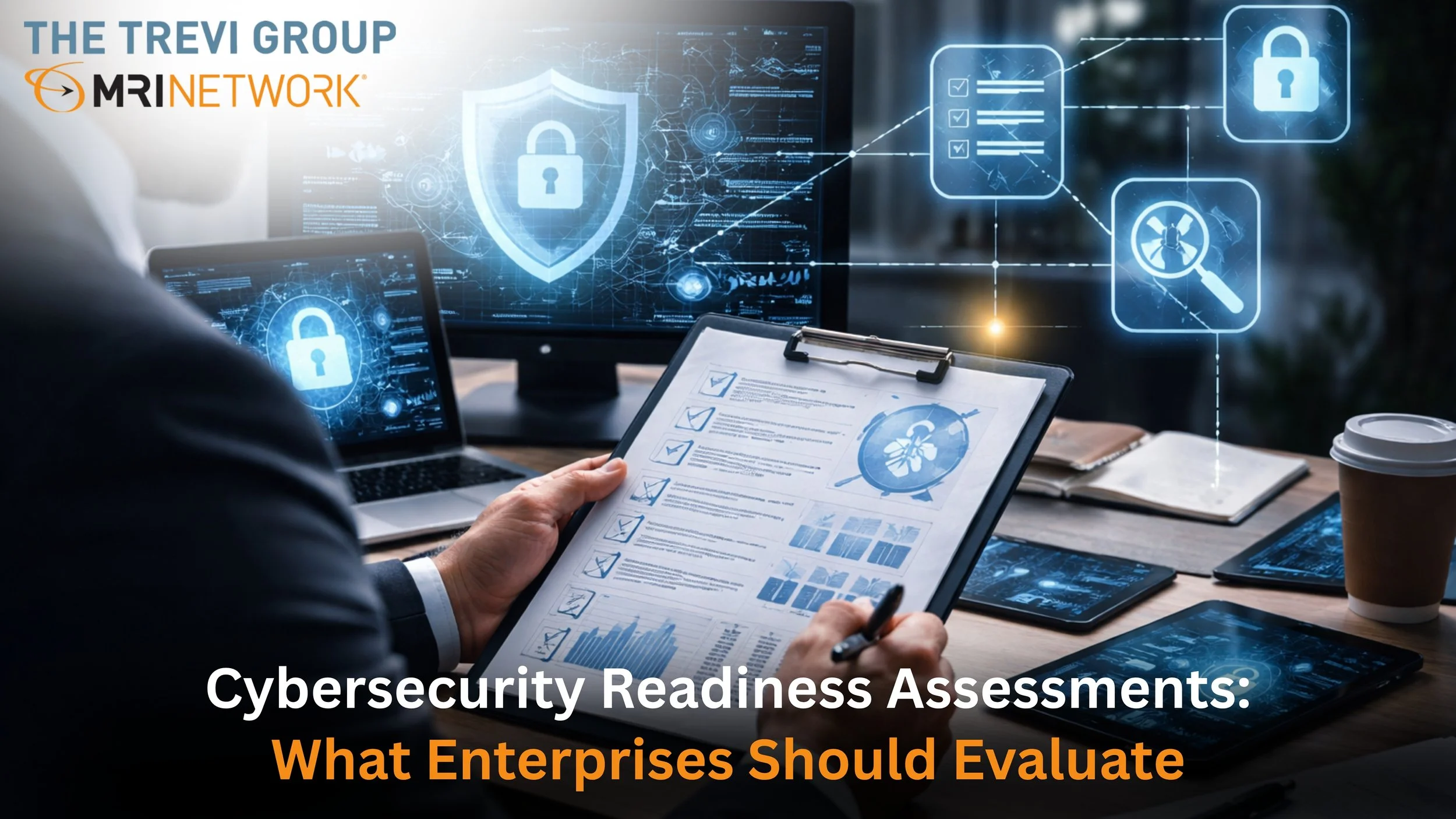
Cybersecurity Readiness Assessments: What Enterprises Should Evaluate

In 2026, cybersecurity is no longer just an IT concern; it’s a boardroom priority. With AI-driven attacks, deepfake phishing, and supply chain vulnerabilities on the rise, enterprises can’t afford a reactive approach. A cybersecurity readiness assessment is your reality check. It reveals how prepared your organization truly is when threats hit, not if they hit.

Why Cyber Readiness Matters More Than Ever

Today’s threat landscape is faster, smarter, and more unpredictable. Hackers are leveraging automation and generative AI to scale attacks, while businesses are expanding across cloud, hybrid, and remote environments. This complexity creates blind spots, and attackers love blind spots.

A strong readiness assessment helps organizations shift from “firefighting mode” to proactive defense. It’s about resilience, not just protection.

Key Areas Every Enterprise Must Evaluate

1. Threat Detection and Response

How quickly can your team detect and respond to an attack?
Modern enterprises are investing in XDR (Extended Detection and Response) and AI-powered SOCs to reduce response time. If your detection still relies heavily on manual processes, you're already behind.

2. Identity and Access Management (IAM)

Passwords alone are outdated. Multi-factor authentication (MFA), zero-trust architecture, and identity governance are now essential.
Ask yourself: Who has access to what, and should they?

3. Cloud Security Posture

With multi-cloud becoming the norm, misconfigurations are one of the biggest risks. A readiness assessment should evaluate your cloud security posture management (CSPM) tools and policies.
One weak configuration can expose millions of records.

4. Employee Awareness and Human Risk

Your employees are your first line of defense or your biggest vulnerability.
Phishing simulations, security awareness training, and behavioral analytics are critical in 2026. Cybersecurity is as much about people as it is about technology.

5. Third-Party and Supply Chain Risk

Vendors, partners, and suppliers can introduce hidden risks.
Enterprises must assess third-party security frameworks and ensure compliance standards are consistently met across the ecosystem.

6. Incident Response and Recovery Plan

When a breach happens, what’s your next move?
A solid incident response plan with regular tabletop exercises ensures your team knows exactly what to do to minimize downtime and reputational damage.

From Compliance to Cyber Resilience

Checking compliance boxes is no longer enough. Enterprises must evolve toward cyber resilience, where systems are designed to anticipate, withstand, and recover from attacks seamlessly.

Final Thought

Cybersecurity readiness isn’t a one-time audit; it’s an ongoing strategy. The enterprises that win in 2026 are the ones that treat security as a business enabler, not a cost center….. Because in today’s digital battlefield, readiness is your real competitive advantage. Contact The Trevi Group if you need talent that can help with these challenges.

The Trevi Group | “Executive Search for Technology Professionals” | www.TheTreviGroup.com

#thetrevigroup #cybersecurity #informationtechnology #incidentresponse #cissp

Meet the Industrial Internet of Things—and the Talent Powering It

The Internet did more than change how people communicate. It changed how systems operate. The Internet of Things (IoT) extends that transformation by connecting physical devices to digital networks, allowing data to move seamlessly between machines, platforms, and people. What began as consumer convenience now underpins critical operations across industries.

The Industrial Internet of Things—also called the IIoT and considered a subset of the IoT—differs in that it targets industrial applications, including those in manufacturing, energy, and logistics. It is a key component of the Fourth Industrial Revolution, or Industry 4.0, which combines artificial intelligence, robotics, big data, and other technologies, changing the way people live and work. 

This guide focuses on how the IIoT is altering manufacturing technology hiring by shaping the skills required for the IIoT workforce. 

Impact of IIoT on Manufacturing Processes

All industries are moving toward greater efficiency, innovation, and automation while aiming to reduce costs and ongoing maintenance. Certain industries, like manufacturing, must also consider worker safety and the supply chain. The IIoT supports these goals, impacting the manufacturing industry in the following ways. 

Enhanced operational efficiency and productivity

The IIoT helps streamline processes by providing real-time data from sensors and machines. Using this data, companies can make adjustments to optimize production workflows. By identifying potential inefficiencies and bottlenecks, manufacturers can easily modify processes to reduce waste and improve output, boosting the company’s bottom line. 

Once you introduce intelligent automation, you enable machines to communicate and coordinate. As a result, they become more adaptive and responsive, adjusting for speed and quality. This improved quality control helps companies produce higher-quality products and reduce errors. 

Cost reductions and predictive maintenance 

The introduction of sensors helps monitor equipment health and predict failures before they happen. That way, companies can schedule proactive maintenance. Not only will this help extend the machine’s life, but it will also reduce unplanned downtime — both of which result in lower costs. 

Safety and supply chain efficiency 

IIoT can monitor potentially hazardous conditions, such as extreme temperatures or high pressures. These monitoring systems can trigger alerts or shut down problematic equipment. The technology helps protect equipment and optimizes productivity, but more importantly, it protects the safety of factory workers. 

As for the supply chain, real-time tracking and monitoring improve efficiency. When monitoring logistics and inventory, companies can streamline deliveries, identify bottlenecks, and respond to changes in demand. 

Read more: The Continued Rise of Smart Factories & the Talent Driving Innovation

Emerging Workforce Skills in the IIoT Era

If you’re building a team with Industrial Internet of Things talent in mind, here are some of the skills you’ll want to consider:

  • Technical skills, ranging from data science and cloud computing to robotics and IIoT infrastructure management. 

  • Digital literacy and cybersecurity awareness, understanding data encryption, security protocols, etc.

  • Adaptability and continuous learning in a rapidly evolving environment will be important. Individuals should be able to manage the pressures of a dynamic, tech-driven work environment. 

  • Other core human skills include solving complex problems, innovating, and collaborating. 

Challenges in Building an IIoT-Ready Workforce

Currently, companies are aiming to build a resilient, skilled workforce in the IIoT era. However, there are ongoing challenges to overcome, including the following. 

  • Addressing the skills gap and talent shortages, as many current employees lack the required tech-related skills and training.

  • Strategies for upskilling and reskilling existing employees may be hard to implement due to a lack of resources and mentorship. Current employees may also resist new technology due to concerns about automation and job security. 

  • Attracting new talent with the necessary competencies can be tough, especially for smaller manufacturing companies. Finding Industrial Internet of Things talent can be time-consuming and costly. 

Next Steps: Workforce Development and Talent Acquisition

To better prepare for the years ahead, you must start implementing structured training programs and collaborating with strategic partners as soon as possible.

Some of the partnerships that may be most beneficial include specialized technology companies and recruitment consultants that can help you target the skills gap. Once you have addressed manufacturing technology hiring, you can focus on rolling out IIoT initiatives and a carefully planned management strategy.

Contact The Trevi Group if you need help preparing a future-ready workforce as you navigate the changing manufacturing ecosystem. 

The Trevi Group | “Executive Search for Technology Professionals” | www.TheTreviGroup.com

#thetrevigroup #recruitingtrends #informationtechnology #employmenttrends #jobmarket #hiringtrends

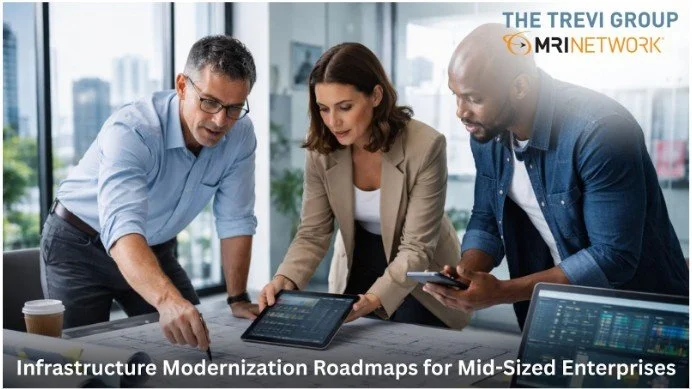
Infrastructure Modernization Roadmaps for Mid-Sized Enterprises

From Legacy Lock-In to AI-Ready, Cloud-Smart Growth in 2026

Mid-sized enterprises are no longer “too small” for transformation or “big enough” to tolerate inefficiency. In 2026, infrastructure modernization is not a luxury project buried in IT budgets. It is a boardroom priority driving agility, resilience, and AI readiness.

The real question is not whether to modernize. It is about building a roadmap that delivers speed without chaos.

Why Modernization Feels Urgent in 2026

Digital acceleration has reshaped customer expectations. Teams demand seamless collaboration. Executives expect real-time data. Meanwhile, cybersecurity threats are more sophisticated, and compliance pressure is rising.

Legacy systems slow innovation. They increase operational risk. They limit scalability. And most importantly, they block AI adoption.

Modern infrastructure is about becoming cloud-smart, data-first, and security-embedded by design.

Step 1: Assess Before You Invest

A strong roadmap starts with clarity.

  • Conduct a full-stack audit of applications, servers, storage, and network architecture.

  • Identify technical debt and performance bottlenecks.s

  • Map systems to business-critical outcomes

  • Evaluate cloud readiness and integration complexity.

Mid-sized enterprises often discover that 30 to 40 percent of workloads can move to hybrid cloud environments with minimal disruption.

Step 2: Design a Phased Hybrid Strategy

Going all-in on public cloud overnight is risky. A hybrid and multi-cloud approach offers flexibility.

  • Migrate non-critical workloads first.

  • Modernize core systems through containerization and microservices

  • Implement edge computing where low latency matters.

  • Build API-driven ecosystems for seamless integrations.

The goal is resilience and scalability without operational shock.

Step 3: Embed Zero-Trust Security Architecture

In 2026, cybersecurity is not an add-on. It is foundational.

  • Adopt zero-trust frameworks

  • Deploy AI-powered threat detection.

  • Automate patch management

  • Strengthen identity and access controls.

Security modernization protects growth, not just data.

Step 4: Enable AI-Ready Infrastructure

AI is transforming decision-making across finance, HR, operations, and customer service. But AI workloads demand robust infrastructure.

  • Upgrade data pipelines

  • Implement scalable storage

  • Optimize compute resources

  • Ensure governance frameworks for responsible AI.

Without modern infrastructure, AI remains a pilot project instead of a competitive advantage.

Step 5: Focus on Change Management

Technology transformation fails without people's alignment.

  • Upskill internal teams

  • Communicate vision clearly

  • Align IT with business strategy.

  • Measure ROI through defined KPIs

Modernization is cultural as much as technical.

The Competitive Edge

For mid-sized enterprises, infrastructure modernization unlocks faster innovation cycles, reduced downtime, improved cost efficiency, and future-ready digital capabilities.

In 2026, the winners are not the biggest organizations. They are the most adaptable. A well-executed modernization roadmap transforms infrastructure from a cost center into a strategic growth engine.

The future is not built on legacy systems. It is engineered on intelligent, secure, scalable foundations. Contact The Trevi Group if you need help in modernizing your IT infrastructure.


The Trevi Group | “Executive Search for Technology Professionals” | www.TheTreviGroup.com

#thetrevigroup #informationtechnology #modernIT

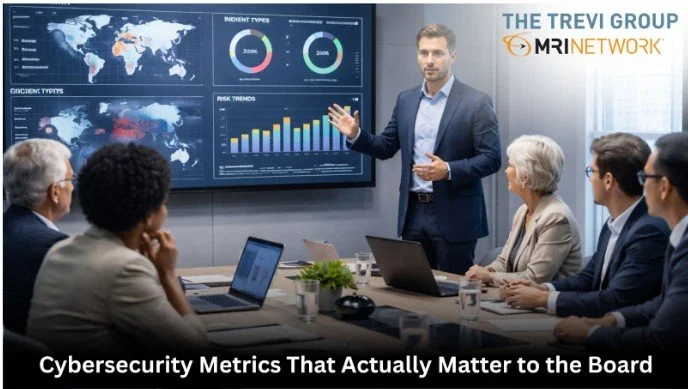
Cybersecurity Metrics That Actually Matter to the Board

In 2026, cybersecurity is no longer an IT line item. It’s a boardroom priority, a brand reputation shield, and a growth enabler. Directors don’t want dashboards packed with technical noise. They want clarity. They want risk translated into business impact.

So what actually matters to the board? Not the number of blocked phishing emails. Not server patch counts. Boards care about resilience, financial exposure, and strategic risk. Here are the metrics that truly move the conversation forward.

1. Cyber Risk in Financial Terms

Boards speak revenue, EBITDA, and shareholder value. Translate cyber risk into potential financial loss. What is the projected impact of a ransomware shutdown? What would regulatory fines look like under evolving global privacy laws?

When cybersecurity is expressed in terms of quantified financial exposure, it becomes a strategic discussion rather than a technical update.

2. Mean Time to Detect and Respond (MTTD & MTTR)

Speed is survival. In today’s AI-driven threat landscape, attackers automate at scale. The question is simple: how fast can your organization detect and contain a breach?

Lower MTTD and MTTR signal operational maturity. They demonstrate that your security team is not just reactive but resilient.

3. Incident Impact and Recovery Readiness

It’s not “if” but “when.” Boards want to know: if an attack hits tomorrow, how quickly can we recover?

Track recovery time objectives (RTO), backup integrity validation rates, and business continuity test results. Cyber resilience is the new competitive advantage.

4. Third-Party and Supply Chain Risk

In 2026, ecosystems are interconnected. Vendors, SaaS platforms, and AI tools; every partner expands the attack surface.

Boards need visibility into third-party risk scoring, critical vendor assessments, and supply chain security posture. One weak link can trigger enterprise-wide disruption.

5. Security Investment vs. Risk Reduction

Cyber budgets are increasing, but are they effective? Show measurable risk reduction tied to investments.

If a new zero-trust architecture reduced privileged-access risk by 40%, say so. If employee phishing susceptibility decreased after simulation training, quantify the decrease. ROI matters.

6. Regulatory and Compliance Exposure

With evolving global frameworks and stricter reporting mandates, compliance is not optional. Boards want assurance that the organization meets industry standards and reporting timelines.

Missed compliance can mean reputational damage beyond financial penalties.

The Real Shift: From Fear to Strategy

Cybersecurity reporting in 2026 is about storytelling with data. It’s about connecting risk to resilience, security to strategy, and technology to trust.

Boards don’t need more alerts. They need insight.

When cybersecurity metrics align with business outcomes, the conversation changes. Security becomes a growth enabler, a trust builder, and a competitive differentiator, not just a defensive shield.

Contact The Trevi Group if you need talent that can assist with this challenge.


The Trevi Group | “Executive Search for Technology Professionals” | www.TheTreviGroup.com

#thetrevigroup #informationtechnology #cybersecurity #mmtd #mttr #incidentresponse 

Reducing System Fragility in Complex IT Architectures

Building Resilient Digital Ecosystems in an Always-On World

In today’s hyperconnected economy, IT systems are no longer back-office utilities; they are the heartbeat of modern enterprises. From financial services and healthcare to energy and e-commerce, organizations operate on deeply interconnected architectures that span cloud platforms, APIs, microservices, edge devices, and third-party integrations. While this complexity drives innovation, it also increases system fragility. A single failure can cascade across environments, disrupt services, and damage customer trust within minutes.

Reducing fragility is no longer a technical preference. It is a business imperative.

Why Modern Architectures Are Fragile

Complex IT environments often evolve faster than they are redesigned. As companies adopt multi-cloud strategies, DevOps pipelines, and AI-driven workloads, layers of interdependency multiply. Without intentional resilience planning, systems become tightly coupled and vulnerable to:

  • Configuration drift across environments

  • API dependency failures

  • Latency spikes and performance bottlenecks

  • Security vulnerabilities in third-party integrations

  • Human error during rapid deployments

In fragile systems, small disruptions amplify instead of being absorbed.

Designing for Resilience from the Ground Up

Reducing fragility requires shifting from reactive troubleshooting to proactive architecture design.

1. Embrace Modular Architecture
Microservices and domain-driven design help isolate failures. When services are loosely coupled, one malfunction does not bring down the entire system. Containment limits blast radius and accelerates recovery.

2. Implement Observability, Not Just Monitoring
Traditional monitoring detects failures. Observability explains why they happen. By integrating distributed tracing, real-time logging, and performance analytics, teams gain deep system visibility and faster root cause analysis.

3. Build Redundancy and Fault Tolerance
Resilient architectures anticipate failure. Load balancing, auto-scaling, and failover mechanisms ensure continuity during traffic spikes or infrastructure outages.

4. Adopt Chaos Engineering Practices
Leading tech organizations intentionally test failure scenarios to identify weaknesses before real-world incidents occur. Controlled disruption builds stronger systems and more confident teams.

5. Strengthen Security Posture
Cyber threats often exploit architectural fragility. Zero-trust frameworks, automated patch management, and continuous vulnerability scanning reduce systemic risk.

The Human Factor in System Stability

Technology alone does not eliminate fragility. Culture plays a decisive role. Cross-functional collaboration between developers, security teams, and operations fosters shared accountability. Post-incident reviews should focus on learning, not blame. Resilience grows when organizations prioritize transparency and continuous improvement.

The Future of Resilient IT

As digital transformation accelerates across industries, system resilience will become a competitive differentiator. Organizations that invest in scalable, fault-tolerant architectures can innovate faster, recover quicker, and maintain customer confidence during disruption.

Reducing system fragility is not about eliminating complexity. It is about managing complexity intelligently. In an era where downtime translates to lost revenue and reputation, resilience is the new currency of digital leadership. Contact The Trevi Group if you need talented IT professionals that can help with this challenge.


The Trevi Group | “Executive Search for Technology Professionals” | www.TheTreviGroup.com

#thetrevigroup #recruitingtrends #informationtechnology #employmenttrends #jobmarket #hiringtrends

Why Infrastructure Decisions Are Now Business Decisions

The Boardroom Has Entered the Server Room

There was a time when infrastructure was a back-office concern. IT teams handled servers, storage, and networking while executives focused on revenue and growth. That separation no longer exists. Today, infrastructure decisions directly shape profitability, customer experience, risk exposure, and competitive advantage.

In 2026, infrastructure is not just technical plumbing. It is a strategic business lever.

1. Speed Is the New Currency

Markets move faster than ever. Product launches, feature updates, and customer rollouts depend on scalable cloud environments and agile systems. If infrastructure cannot scale instantly, opportunities are lost.

• Cloud-native platforms allow businesses to expand globally in weeks, not years
• Automation reduces deployment time from months to hours
• Edge computing enhances real-time responsiveness

Infrastructure now determines how quickly a company can innovate. Speed equals revenue.

2. Downtime Is a Brand Risk

Customers expect 24/7 availability. A few minutes of system failure can lead to lost sales, damaged reputation, and public backlash.

• High-availability architecture protects revenue streams
• Disaster recovery planning safeguards business continuity
• Cybersecurity integration protects brand trust

Infrastructure resilience is no longer technical insurance. It is brand protection.

3. Cost Control Is a Strategic Choice

Infrastructure spending is one of the largest operational expenses for modern enterprises. The decision between on-premises systems, hybrid cloud, or multi-cloud environments directly impacts financial performance.

• Smart cloud optimization reduces wasted spending
• Pay-as-you-scale models increase financial flexibility
• Data-driven infrastructure decisions improve ROI

Executives are now deeply involved in infrastructure budgeting because it shapes long-term profitability.

4. Data Is the Core Asset

Artificial intelligence, predictive analytics, and automation depend on strong data architecture. Poor infrastructure limits insight. Robust infrastructure unlocks intelligence.

• Secure data pipelines support AI-driven strategies
• Scalable storage powers analytics and forecasting
• Integrated systems improve decision-making accuracy

Infrastructure determines how effectively an organization uses its data capital.

5. Security Is Business Stability

Cyber threats are escalating. Infrastructure security decisions affect regulatory compliance, investor confidence, and operational continuity.

• Zero-trust frameworks reduce vulnerability
• Integrated security architecture protects digital assets
• Compliance-ready systems prevent legal penalties

Security is no longer optional overhead. It is business survival.

The Competitive Edge

The companies winning today are not just building better products. They are building smarter infrastructure ecosystems. Leaders now ask strategic questions about scalability, resilience, and digital agility because infrastructure defines future readiness.

Infrastructure is no longer a technical support system. It is a growth engine, a risk shield, and a profitability driver.

In 2026, infrastructure decisions are not IT decisions. They are business decisions that shape the future of the enterprise.


The Trevi Group | “Executive Search for Technology Professionals” | www.TheTreviGroup.com

#thetrevigroup #recruitingtrends #informationtechnology #employmenttrends #jobmarket #hiringtrends

The Role of Network Engineers in Application Performance Optimization

Modern applications are only as good as the experience they deliver. Fast, reliable, and seamless performance is no longer optional. Behind that experience, network engineers play a critical and often underestimated role in application performance optimization.

Why Network Engineers Matter More Than Ever

Applications today operate in complex environments: cloud platforms, hybrid infrastructures, remote users, and real-time data flows. Network engineers ensure all these moving parts communicate smoothly.

They do not just keep systems online. They actively shape how applications behave under pressure, traffic spikes, and user demand.

How Network Engineers Optimize Application Performance

Network engineers influence application performance in powerful ways, including:

  • Traffic Flow Optimization
    They design routing paths that reduce latency and eliminate bottlenecks, ensuring data reaches users faster.

  • Bandwidth Management
    By prioritizing critical application traffic, they prevent congestion from slowing down essential business tools.

  • Load Balancing Strategies
    Engineers distribute traffic intelligently across servers so applications remain responsive even during peak usage.

  • Network Monitoring and Analytics
    Using real-time performance metrics, they identify issues before users ever notice them.

Collaboration with Application Teams

Today’s network engineers work closely with DevOps and application teams. This collaboration helps align network architecture with application needs, especially for microservices, APIs, and cloud native platforms.

Instead of reacting to problems, engineers proactively design networks that support scalability and speed from day one.

The Future of Application Performance

With AI-driven applications, edge computing, and remote work becoming the norm, the role of network engineers is evolving rapidly. Automation, software-defined networking, and performance intelligence tools are now essential skills.

Final Thought

Great application performance does not happen by accident. It is engineered. Network engineers are no longer just support players. They are strategic drivers of digital experience, business reliability, and customer satisfaction. Contact The Trevi Group when you need help hiring engineers that can handle this for you.

The Trevi Group | “Executive Search for Technology Professionals” | www.TheTreviGroup.com

#networkengineer #thetrevigroup #recruitingtrends #informationtechnology #employmenttrends #jobmarket #hiringtrends

Infrastructure Modernization Without Disruption: A Phased IT Approach

The Modernization Paradox

Every organization knows its infrastructure must evolve. Legacy systems strain under modern demands, security threats grow sharper, and customers expect speed without excuses. Yet modernization carries a fear: disruption. Downtime, broken workflows, and frustrated teams can cost more than outdated technology itself. The solution is not to rush change, but to design it deliberately through a phased IT modernization approach that preserves continuity while enabling transformation.

Why “Rip and Replace” No Longer Works

In today’s always-on digital economy, shutting systems down for large-scale overhauls is rarely an option. Enterprises operate across cloud platforms, remote teams, global customers, and compliance-heavy environments. A single failure can ripple across departments and damage trust. Modernization must therefore feel invisible to end users while being powerful behind the scenes.

A phased approach allows organizations to modernize in motion, improving systems incrementally without pulling the emergency brake on business operations.

Phase One: Strategic Assessment and Alignment

Modernization begins with clarity, not technology. This phase focuses on understanding what truly needs to change.

Key priorities include
• Mapping current infrastructure and technical debt
• Identifying business-critical systems versus low-risk components
• Aligning IT goals with business outcomes such as scalability, security, and cost optimization

This step ensures modernization solves real problems rather than introducing shiny but unnecessary tools.

Phase Two: Modular Upgrades and Hybrid Models

Instead of transforming everything at once, organizations modernize in layers. This often means running legacy and modern systems side by side.

Examples include
• Migrating non-critical workloads to the cloud first
• Introducing APIs to connect old systems with modern applications
• Upgrading storage, networking, or security components independently

This modular approach reduces risk, allows testing in real environments, and builds internal confidence.

Phase Three: Automation and Intelligent Operations

Once foundational upgrades are in place, automation becomes the accelerator. Manual processes that once required constant monitoring can now self-correct and scale automatically.

Organizations focus on
• Infrastructure as Code for consistent deployments
• Automated patching and monitoring
• AI-driven analytics to predict failures before they happen

At this stage, IT shifts from reactive firefighting to proactive optimization.

Phase Four: Optimization and Continuous Evolution

Modernization is not a finish line. It is a living strategy. Continuous optimization ensures systems remain efficient, secure, and aligned with changing business needs.

This phase emphasizes
• Performance tuning and cost governance
• Regular security reviews and compliance updates
• Continuous feedback from users and stakeholders

The result is an infrastructure that evolves quietly, without drama or disruption.

The Human Side of Phased Modernization

Technology does not modernize organizations; people do. A phased approach reduces change fatigue, gives teams time to adapt, and builds trust across departments. Employees remain productive, customers remain unaware of internal shifts, and leadership sees measurable progress without chaos.

The Competitive Advantage

Infrastructure modernization done right becomes a competitive weapon. Businesses gain agility, resilience, and the ability to adopt future innovations faster than their peers. By modernizing in phases, organizations avoid disruption while building an IT foundation designed not just for today, but for what comes next.

Modernization without disruption is no longer an aspiration. A phased approach is a practical, proven path forward. Contact The Trevi Group if you need help hiring talent that can handle this in your organization.

The Trevi Group | “Executive Search for Technology Professionals” | www.TheTreviGroup.com

#thetrevigroup #recruitingtrends #informationtechnology #employmenttrends #jobmarket #hiringtrends