Why Infrastructure Decisions Are Now Business Decisions

The Boardroom Has Entered the Server Room

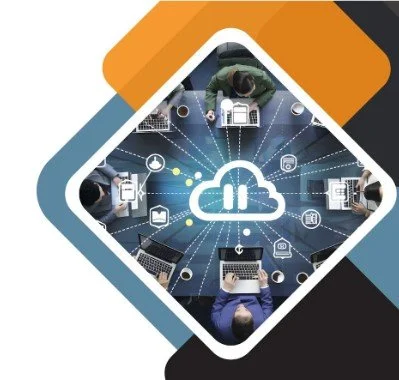
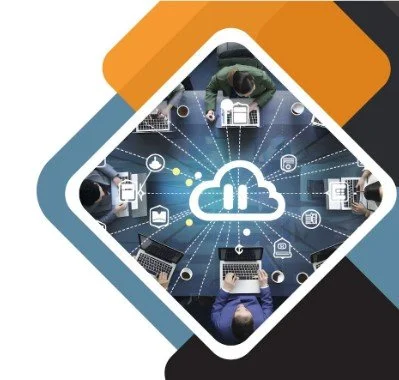
There was a time when infrastructure was a back-office concern. IT teams handled servers, storage, and networking while executives focused on revenue and growth. That separation no longer exists. Today, infrastructure decisions directly shape profitability, customer experience, risk exposure, and competitive advantage.

In 2026, infrastructure is not just technical plumbing. It is a strategic business lever.

1. Speed Is the New Currency

Markets move faster than ever. Product launches, feature updates, and customer rollouts depend on scalable cloud environments and agile systems. If infrastructure cannot scale instantly, opportunities are lost.

• Cloud-native platforms allow businesses to expand globally in weeks, not years
• Automation reduces deployment time from months to hours
• Edge computing enhances real-time responsiveness

Infrastructure now determines how quickly a company can innovate. Speed equals revenue.

2. Downtime Is a Brand Risk

Customers expect 24/7 availability. A few minutes of system failure can lead to lost sales, damaged reputation, and public backlash.

• High-availability architecture protects revenue streams
• Disaster recovery planning safeguards business continuity
• Cybersecurity integration protects brand trust

Infrastructure resilience is no longer technical insurance. It is brand protection.

3. Cost Control Is a Strategic Choice

Infrastructure spending is one of the largest operational expenses for modern enterprises. The decision between on-premises systems, hybrid cloud, or multi-cloud environments directly impacts financial performance.

• Smart cloud optimization reduces wasted spending
• Pay-as-you-scale models increase financial flexibility
• Data-driven infrastructure decisions improve ROI

Executives are now deeply involved in infrastructure budgeting because it shapes long-term profitability.

4. Data Is the Core Asset

Artificial intelligence, predictive analytics, and automation depend on strong data architecture. Poor infrastructure limits insight. Robust infrastructure unlocks intelligence.

• Secure data pipelines support AI-driven strategies
• Scalable storage powers analytics and forecasting
• Integrated systems improve decision-making accuracy

Infrastructure determines how effectively an organization uses its data capital.

5. Security Is Business Stability

Cyber threats are escalating. Infrastructure security decisions affect regulatory compliance, investor confidence, and operational continuity.

• Zero-trust frameworks reduce vulnerability
• Integrated security architecture protects digital assets
• Compliance-ready systems prevent legal penalties

Security is no longer optional overhead. It is business survival.

The Competitive Edge

The companies winning today are not just building better products. They are building smarter infrastructure ecosystems. Leaders now ask strategic questions about scalability, resilience, and digital agility because infrastructure defines future readiness.

Infrastructure is no longer a technical support system. It is a growth engine, a risk shield, and a profitability driver.

In 2026, infrastructure decisions are not IT decisions. They are business decisions that shape the future of the enterprise.


The Trevi Group | “Executive Search for Technology Professionals” | www.TheTreviGroup.com

#thetrevigroup #recruitingtrends #informationtechnology #employmenttrends #jobmarket #hiringtrends


The Role of Network Engineers in Application Performance Optimization

Modern applications are only as good as the experience they deliver. Fast, reliable, and seamless performance is no longer optional. Behind that experience, network engineers play a critical and often underestimated role in application performance optimization.

Why Network Engineers Matter More Than Ever

Applications today operate in complex environments: cloud platforms, hybrid infrastructures, remote users, and real-time data flows. Network engineers ensure all these moving parts communicate smoothly.

They do not just keep systems online. They actively shape how applications behave under pressure, traffic spikes, and user demand.

How Network Engineers Optimize Application Performance

Network engineers influence application performance in powerful ways, including:

  • Traffic Flow Optimization
    They design routing paths that reduce latency and eliminate bottlenecks, ensuring data reaches users faster.

  • Bandwidth Management
    By prioritizing critical application traffic, they prevent congestion from slowing down essential business tools.

  • Load Balancing Strategies
    Engineers distribute traffic intelligently across servers so applications remain responsive even during peak usage.

  • Network Monitoring and Analytics
    Using real-time performance metrics, they identify issues before users ever notice them.

Collaboration with Application Teams

Today’s network engineers work closely with DevOps and application teams. This collaboration helps align network architecture with application needs, especially for microservices, APIs, and cloud native platforms.

Instead of reacting to problems, engineers proactively design networks that support scalability and speed from day one.

The Future of Application Performance

With AI-driven applications, edge computing, and remote work becoming the norm, the role of network engineers is evolving rapidly. Automation, software-defined networking, and performance intelligence tools are now essential skills.

Final Thought

Great application performance does not happen by accident. It is engineered. Network engineers are no longer just support players. They are strategic drivers of digital experience, business reliability, and customer satisfaction. Contact The Trevi Group when you need help hiring engineers that can handle this for you.

The Trevi Group | “Executive Search for Technology Professionals” | www.TheTreviGroup.com

#networkengineer #thetrevigroup #recruitingtrends #informationtechnology #employmenttrends #jobmarket #hiringtrends

Infrastructure Modernization Without Disruption: A Phased IT Approach

The Modernization Paradox

Every organization knows its infrastructure must evolve. Legacy systems strain under modern demands, security threats grow sharper, and customers expect speed without excuses. Yet modernization carries a fear: disruption. Downtime, broken workflows, and frustrated teams can cost more than outdated technology itself. The solution is not to rush change, but to design it deliberately through a phased IT modernization approach that preserves continuity while enabling transformation.

Why “Rip and Replace” No Longer Works

In today’s always-on digital economy, shutting systems down for large-scale overhauls is rarely an option. Enterprises operate across cloud platforms, remote teams, global customers, and compliance-heavy environments. A single failure can ripple across departments and damage trust. Modernization must therefore feel invisible to end users while being powerful behind the scenes.

A phased approach allows organizations to modernize in motion, improving systems incrementally without pulling the emergency brake on business operations.

Phase One: Strategic Assessment and Alignment

Modernization begins with clarity, not technology. This phase focuses on understanding what truly needs to change.

Key priorities include
• Mapping current infrastructure and technical debt
• Identifying business-critical systems versus low-risk components
• Aligning IT goals with business outcomes such as scalability, security, and cost optimization

This step ensures modernization solves real problems rather than introducing shiny but unnecessary tools.

Phase Two: Modular Upgrades and Hybrid Models

Instead of transforming everything at once, organizations modernize in layers. This often means running legacy and modern systems side by side.

Examples include
• Migrating non-critical workloads to the cloud first
• Introducing APIs to connect old systems with modern applications
• Upgrading storage, networking, or security components independently

This modular approach reduces risk, allows testing in real environments, and builds internal confidence.

Phase Three: Automation and Intelligent Operations

Once foundational upgrades are in place, automation becomes the accelerator. Manual processes that once required constant monitoring can now self-correct and scale automatically.

Organizations focus on
• Infrastructure as Code for consistent deployments
• Automated patching and monitoring
• AI-driven analytics to predict failures before they happen

At this stage, IT shifts from reactive firefighting to proactive optimization.

Phase Four: Optimization and Continuous Evolution

Modernization is not a finish line. It is a living strategy. Continuous optimization ensures systems remain efficient, secure, and aligned with changing business needs.

This phase emphasizes
• Performance tuning and cost governance
• Regular security reviews and compliance updates
• Continuous feedback from users and stakeholders

The result is an infrastructure that evolves quietly, without drama or disruption.

The Human Side of Phased Modernization

Technology does not modernize organizations; people do. A phased approach reduces change fatigue, gives teams time to adapt, and builds trust across departments. Employees remain productive, customers remain unaware of internal shifts, and leadership sees measurable progress without chaos.

The Competitive Advantage

Infrastructure modernization done right becomes a competitive weapon. Businesses gain agility, resilience, and the ability to adopt future innovations faster than their peers. By modernizing in phases, organizations avoid disruption while building an IT foundation designed not just for today, but for what comes next.

Modernization without disruption is no longer an aspiration. A phased approach is a practical, proven path forward. Contact The Trevi Group if you need help hiring talent that can handle this in your organization.

The Trevi Group | “Executive Search for Technology Professionals” | www.TheTreviGroup.com

#thetrevigroup #recruitingtrends #informationtechnology #employmenttrends #jobmarket #hiringtrends

Why Infrastructure Standardization Is Making a Smart, Strategic Comeback in Enterprises

For years, enterprises chased customization—bespoke systems, unique stacks, and “tailored” infrastructure meant to deliver a competitive edge. Fast forward to today, and that same complexity has become a liability. Rising costs, security gaps, and operational drag are pushing organizations to rediscover a powerful idea: infrastructure standardization—done right.

This isn’t a step backward. It’s a reset.

The New Reality: Speed Beats Complexity

Modern enterprises are under pressure to move fast, stay secure, and scale without friction. Highly customized environments slow everything down—deployments, troubleshooting, upgrades, even innovation. Standardized infrastructure flips the script by creating repeatable, predictable systems that teams can actually manage.

When everyone works from the same blueprint, execution accelerates.

Why Enterprises Are Embracing Standardization Again

• Cost Control Without Compromise
Standardized environments reduce redundant tools, licensing sprawl, and maintenance overhead—freeing up budgets for innovation rather than firefighting.

• Security by Design
Consistent configurations mean fewer blind spots. Security teams can enforce policies uniformly, patch faster, and respond to threats with confidence.

• Cloud and Hybrid Harmony
As organizations balance on-prem, cloud, and hybrid models, standardization creates a common operating language—making transitions smoother and less risky.

• Talent Efficiency
IT teams no longer need niche expertise for every system. Standard platforms make onboarding easier and reduce dependency on hard-to-replace specialists.

Not Rigid—Resilient

Today’s standardization isn’t about locking innovation in a box. It’s about flexible standards—modular architectures, automation-first designs, and scalable frameworks that support growth without chaos.

Think of it as building strong foundations, not concrete ceilings.

The Bottom Line

Infrastructure standardization is back because enterprises have learned a hard truth: simplicity scales better than complexity. In a world driven by agility, resilience, and speed, standardized infrastructure isn’t just efficient—it’s a competitive advantage.

And this time, enterprises are making it stick.

The Trevi Group | “Executive Search for Technology Professionals” | www.TheTreviGroup.com

#thetrevigroup #recruitingtrends #informationtechnology #employmenttrends #jobmarket #hiringtrends

Network Complexity Is the New Security Risk

Why modern digital environments are harder to defend than ever before

For years, cybersecurity focused on a familiar enemy: hackers exploiting weak passwords, unpatched systems, or careless clicks. But today, the most dangerous threat often isn’t an external attacker at all—it’s complexity. As organizations race to adopt cloud services, SaaS platforms, remote work tools, and AI-driven systems, their networks have quietly transformed into sprawling, interconnected ecosystems. And that complexity itself has become the new security risk.

The hidden cost of “more tools, more speed.”

Modern businesses thrive on agility. New applications are added weekly, employees log in from anywhere, and data flows across clouds, devices, and third-party vendors. On paper, this is innovation. In practice, it creates blind spots.

Every new integration adds:

  • Another identity to manage

  • Another permission set to track

  • Another pathway attackers can exploit

Security teams aren’t just protecting systems anymore—they’re trying to understand how hundreds of systems interact in real time. That’s a tall order, even for the best teams.

When visibility disappears, risk explodes.

Complex networks make it harder to answer basic security questions:

  • Who has access to what?

  • Which permissions are excessive or outdated?

  • Where does sensitive data actually travel?

When environments become too complex, misconfigurations slip through unnoticed. A forgotten admin account, an over-privileged user, or a poorly secured API can quietly sit in place—until it’s exploited. Many high-profile breaches today don’t rely on advanced malware; they exploit confusion.

Identity sprawl: the silent accelerator

At the center of network complexity is identity. Employees, contractors, service accounts, bots, and integrations all need access. Over time, identities multiply faster than security controls can keep up.

This leads to:

  • Privilege creep as roles change

  • Orphaned accounts that never get removed

  • Inconsistent access policies across systems

Attackers know this. Instead of breaking in, they log in—using valid credentials hidden in the noise of a complex environment.

Complexity slows response when seconds matter.

When something goes wrong, complexity becomes a liability. Incident response teams must trace activity across multiple platforms, vendors, and logs. Delays aren’t caused by lack of skill, but by tangled systems that weren’t designed with clarity in mind.

The result?
Longer detection times, slower containment, and greater business impact.

Simplification is the new security strategy.

The future of cybersecurity isn’t about stacking more tools—it’s about reducing friction and increasing clarity.

Forward-thinking organizations are focusing on:

  • Centralized visibility across identities, access, and assets

  • Continuous monitoring instead of periodic audits

  • Least-privilege access as a default, not an afterthought

  • Security architectures that prioritize simplicity and scale

Security doesn’t fail because teams don’t care. It fails because the environment becomes too complex to reason about.

Final thought

Network complexity isn’t going away. Digital transformation demands it. But unmanaged complexity is no longer just an IT challenge—it’s a security risk with real consequences.

The organizations that succeed won’t be the ones with the most tools. They’ll be the ones who design networks that humans can actually understand, control, and defend. Contact The Trevi Group if you need help hiring engineers and architectures that can handle this for you.

The Trevi Group | “Executive Search for Technology Professionals” | www.TheTreviGroup.com

#thetrevigroup #recruitingtrends #informationtechnology #employmenttrends #jobmarket #hiringtrends

Cybersecurity as Care: How healthtech firms are protecting patient data in 2026

Cybersecurity and healthtech

The healthcare sector is especially vulnerable to cyber security threats, in large part because of the high value of patient data. Attackers are also drawn to this sector because of vulnerable legacy systems and the perception that health care companies will pay ransom to protect patients and restore critical systems.

Today, health care is the most expensive industry to respond to and recover from data breaches. In 2024, the average cost for a breach is in the in this industry was nearly $10 million. Whether you want to reduce the risk of financial losses or maintain public trust and regulatory compliance, integrating cyber security talent and technology must become a top priority for healthcare firms this upcoming year and beyond. new

Health tech cyber security in 2026: Current trends new

Stay on top of the latest cybersecurity trends, including the following:

  • Increase use of artificial intelligence and AI and machine learning to detect threats. This technology can rapidly analyze network and system data to identify potential threats. AI and ML algorithms can also initiate faster response times and predict future vulnerabilities via predictive analytics.

  • Implementation of blockchain in secure data exchange, allowing organizations to communicate data across a distributed database while allowing for a quick and secure interchange of medical transactions. new

  • Enhanced focus on protecting patient data is becoming a top priority based on stricter regulations and the increasing use of digital technologies period from enhanced data interoperability to stricter 3rd party risk management. new

Regulatory landscape and compliance: what to know new

Health tech firms must remain aware of all compliance requirements to protect sensitive patient data (focusing on the Health Insurance Portability and Accountability Act, HIPAA, as the primary framework). In recent years, the US Department of Health and Human Services (HHS) has proposed a major overhaul of the HIPAA security rule based on recent concerns.

Updates are expected in late 2026 and will likely continue into 2027, ranging from encryption and multi factor authentication to faster breach notifications and stricter incident response plans. Health tech firms must stay up to date on HIPAA updates and changes, while also considering other federal regulations, such as those issued by the US Food and Drug Administration FDA and the Centers for Medicare and Medical Services CMS. Companies must balance safety and compliance with developing products, entering the market, and managing data. new

Strategies for continuous improvement in data protection new

Whether you're operating in healthcare or cybersecurity industries, understanding effective prevention and remediation is the first step to staying ahead of healthcare data security trends.

Here are some effective strategies used today:

  • Stricter access management: you must manage many accounts and implement least privilege principles. north new

  • Network security measures: use firewalls, segmentation, and encryption best practices, and adapt to changes and trends.

  • Employee training: An informed team can significantly reduce risks, which is why you should implement regular cyber security awareness programs that focus on annual changes, new technologies, and other updates.

  • Incident Response Planning: Don't wait until you're forced to take action to create one. Have a clear, updated response plan will help you respond to attacks quickly and efficiently. new

  • Conduct Audits: Regular security audits help you test and identify vulnerabilities. Taking this protective measure will help you implement preventative security solutions before a larger issue arises.

Predictions for cyber security developments

Across the health tech space, cybersecurity developments will continue. These developments will require an increased focus on security and spending as companies move from a reactive to a proactive approach.

The increased budgets will focus on adopting various solutions, such as SaaS models that identify and patch vulnerabilities. those in health tech will also likely invest more heavily in AI and machine learning.

You'll want to focus on tools that offer real time threat detection and protect against potential future attacks. For example, automating the identification of network and user behavior anomalies. If a device is compromised, AI can automatically lock flagged devices.

Since these technologies are evolving for health tech companies that means they're also becoming more sophisticated for attackers. To prepare, companies are likely to transition to a Zero Trust architecture They will also need to be aware of frequent privacy and security policy updates, which are anticipated at the state and federal levels.

Build the right team today

Seeking cyber security experts or managers to help your team navigate the coming months and years, Contact The Trevi Group to address your current cybersecurity hiring strategy and find the professionals you need today!

The Trevi Group | “Executive Search for Technology Professionals” | www.TheTreviGroup.com

#thetrevigroup #recruitingtrends #informationtechnology #employmenttrends #jobmarket #hiringtrends

Why Network Resilience Matters More Than Speed in Modern Enterprises

Speed Gets Attention. Resilience Keeps the Business Alive.

For years, enterprises have obsessed over network speed. Faster connections. Lower latency. Bigger bandwidth. While speed still matters, it is no longer the defining factor of a strong enterprise network. In today’s always-on, threat-heavy, cloud-driven world, network resilience has become far more critical than raw performance.

A fast network that fails under pressure is a liability. A resilient network that adapts, recovers, and continues operating is a competitive advantage.

What Network Resilience Really Means Today

Network resilience is not just about avoiding downtime. It is about designing systems that expect disruption and survive it.

Modern resilience includes:

  • The ability to automatically reroute traffic during failures

  • Built in redundancy across cloud, edge, and on-prem systems

  • Rapid recovery from cyberattacks, outages, or traffic spikes

  • Continuous visibility into performance and security risks

In short, resilience means the business continues to operate even when things go wrong.

Why Speed Alone Is No Longer Enough

A lightning-fast network is impressive until it breaks. Today’s enterprises operate across:

  • Hybrid and multi-cloud environments

  • Remote and distributed workforces

  • SaaS platforms and API driven ecosystems

  • Constant cyber threats and compliance pressures

In this environment, speed without stability creates fragility. A single outage can:

  • Halt operations across departments

  • Disrupt customer experiences

  • Damage brand trust

  • Trigger regulatory and financial consequences.

Resilience minimizes these risks. Speed does not.

Cyber Threats Changed the Priority Order

Ransomware, DDoS attacks, and supply chain compromises have forced organizations to rethink network design. Attackers no longer target just data. They target availability.

A resilient network:

  • Detects abnormal behavior early

  • Isolates affected segments automatically.

  • Maintains critical services during an attack

  • Enables faster, cleaner recovery

Enterprises that focus only on speed often discover too late that they optimized the wrong metric.

Resilience Drives Business Confidence

Resilient networks empower leadership to move faster strategically, even if the network itself is not the fastest on paper.

Benefits include:

  • Confidence to adopt new digital tools

  • Safer cloud migrations

  • Reliable customer-facing applications

  • Stronger disaster recovery posture

  • Reduced stress on IT and security teams

When leaders trust the network, innovation accelerates.

Customers Value Reliability More Than Milliseconds

Customers rarely notice a 20-millisecond improvement in speed. They always notice outages.

From e-commerce platforms to financial services to healthcare systems, reliability shapes perception. A resilient network ensures:

  • Consistent uptime

  • Predictable performance

  • Seamless user experiences

  • Long-term customer loyalty

Reliability builds trust. Speed alone does not.

The New Enterprise Network Mindset

Modern enterprises are shifting their priorities:

  • From fastest to most reliable

  • From reactive fixes to proactive design

  • From siloed infrastructure to integrated resilience strategies

The most successful organizations treat resilience as a core business function, not a technical afterthought.

Final Thought

Speed wins benchmarks. Resilience wins markets.

In a world defined by uncertainty, disruption, and constant change, the enterprises that thrive are not the fastest. They are the ones who stay online, secure, and operational when it matters most.

The Trevi Group | “Executive Search for Technology Professionals” | www.TheTreviGroup.com

#networkengineer #thetrevigroup #recruitingtrends #informationtechnology #employmenttrends #jobmarket #hiringtrends

Network Visibility in Multi-Cloud Environments: What IT Teams Overlook

The Blind Spots Hiding in Plain Sight

Multi-cloud has become the default strategy for modern enterprises. Spreading workloads across AWS, Azure, Google Cloud, and private infrastructure offers flexibility, resilience, and vendor independence. But while organizations move fast to adopt multi-cloud, many IT teams quietly inherit a serious problem: they can no longer see their own networks clearly.

Network visibility in a multi-cloud world isn’t just harder—it’s fundamentally different. Traditional tools weren’t designed for dynamic, software-defined environments where traffic shifts in seconds and infrastructure is constantly rebuilt. As a result, critical blind spots emerge, often unnoticed until performance degrades or a security incident occurs.

Why Multi-Cloud Breaks Traditional Visibility Models

In on-prem environments, traffic paths were predictable, and tools had a fixed vantage point. Multi-cloud environments remove that certainty.

  • Ephemeral infrastructure spins up and disappears before monitoring tools can even register it

  • East-west traffic between cloud services now outweighs north-south traffic, but remains poorly monitored.

  • Cloud-native abstractions hide underlying network behavior from legacy tools.

What IT teams think they’re monitoring is often only a small fraction of actual network activity.

What IT Teams Commonly Overlook

1. Inter-Cloud Traffic Visibility

Most teams focus on visibility inside individual clouds, but the absolute risk lies between them. Traffic flowing from AWS to Azure or to on-prem systems often passes through unmanaged paths with limited inspection. These gaps become ideal targets for lateral movement and data exfiltration.

2. Shared Responsibility Misunderstanding

Cloud providers secure the infrastructure—but not your network behavior. Many organizations assume visibility is “handled by the cloud,” only to discover they’re responsible for logging, flow analysis, and anomaly detection.

3. Tool Fragmentation

Using different monitoring tools for each cloud creates silos. Teams end up manually correlating dashboards, slowing down troubleshooting and masking root causes. Visibility without correlation is noise, not insight.

4. Encrypted Traffic Assumptions

Encryption is essential, but it also blinds inspection. Many IT teams stop visibility at the encryption boundary, failing to analyze metadata, flow behavior, and traffic patterns that can still reveal anomalies without decrypting payloads.

Why Lack of Visibility Becomes a Business Risk

Poor network visibility isn’t just a technical issue—it’s a business liability.

  • Security teams miss early indicators of compromise.

  • Operations teams struggle to pinpoint latency and performance issues.

  • Executives face higher downtime, compliance exposure, and incident costs.

When visibility is incomplete, the response becomes reactive rather than proactive.

Rethinking Network Visibility for Multi-Cloud

Modern visibility requires a mindset shift:

  • Unified observability, not cloud-specific monitoring

  • Flow-based and behavior-based analysis, not just packet inspection

  • Automation-friendly tools that adapt to dynamic environments

  • Security and performance data combined, not separated.

Visibility must be designed into architecture—not bolted on after deployment.

The Competitive Advantage of Seeing Clearly

Organizations that master multi-cloud visibility don’t just reduce risk—they move faster. They detect issues earlier, resolve incidents quicker, and design networks with confidence. In a world where infrastructure is invisible by design, clarity becomes a competitive advantage.

Multi-cloud isn’t the problem. Flying blind is. Contact The Trevi Group if you need help finding talent that can help with these challenges.

The Trevi Group | “Executive Search for Technology Professionals” | www.TheTreviGroup.com

#thetrevigroup #recruitingtrends #informationtechnology #employmenttrends #jobmarket #hiringtrends #multicloud #networkengineer

Security by Design: Embedding Protection Into IT Architecture from Day One

Why Security Can’t Be an Afterthought Anymore

In today’s hyperconnected world, security failures rarely happen because teams didn’t care—they happen because protection was added too late. When security is bolted on after systems are built, organizations inherit blind spots, technical debt, and fragile defenses. Security by Design flips this script by embedding protection directly into IT architecture from the very first decision, not as a patch, but as a foundation.

This approach isn’t just more innovative—it’s essential for modern industries navigating cloud adoption, AI, remote workforces, and constantly evolving cyber threats.

What Security by Design Really Means

Security by Design is not a single tool or checklist. It’s a mindset that treats security as a core business requirement, just like performance, scalability, and usability.

At its core, it means:

  • Designing systems with least privilege and zero trust principles

  • Anticipating threats before deployment

  • Building controls into workflows, not around them

  • Making security invisible to users but unavoidable for attackers

Instead of asking “How do we secure this later?”, teams ask “How could this fail—and how do we prevent that now?”

Industries Where Security by Design Is Non-Negotiable

Financial Services

Banks, fintech platforms, and payment processors handle sensitive data every second. Security by Design ensures encryption, identity verification, and fraud detection are embedded into transaction flows—not layered on afterward.

Healthcare & Life Sciences

With patient data under constant threat, secure-by-design architectures protect electronic health records, connected devices, and telehealth platforms without disrupting care delivery.

Manufacturing & Critical Infrastructure

As operational technology merges with IT, security must be built into industrial systems from the start to prevent downtime, sabotage, or safety risks.

Technology & SaaS

Startups that prioritize speed often regret skipping security. Security by Design enables rapid innovation while protecting APIs, cloud environments, and customer data at scale.

Key Principles That Make Security by Design Work

  • Threat Modeling Early
    Identify risks during planning, not after launch. Every feature should answer one question: What could go wrong?

  • Secure Defaults
    Systems should be secure out of the box—no optional checkboxes for basic protection.

  • Defense in Depth
    No single control is enough. Layer identity, network, application, and data protections together.

  • Automation Over Assumptions
    Automated security controls reduce human error and maintain consistent defenses as systems evolve.

  • Continuous Validation
    Security isn’t “done.” Built-in monitoring, testing, and feedback loops keep architecture resilient over time.

The Business Advantage of Building Security In

Organizations that adopt Security by Design move faster with confidence. They experience fewer breaches, lower remediation costs, and stronger trust with customers and partners. More importantly, security stops being a blocker—and becomes an enabler of growth.

When protection is woven into architecture from day one, teams spend less time reacting to incidents and more time building what matters.

Final Thought

Security by Design isn’t about paranoia—it’s about preparedness. In an era when threats evolve daily, the strongest systems are those that were never vulnerable to begin with. Building security in from day one isn’t just best practice anymore—it’s the price of admission to the digital future.

The Trevi Group | “Executive Search for Technology Professionals” | www.TheTreviGroup.com

#ITarchitecture #thetrevigroup #recruitingtrends #informationtechnology #employmenttrends #jobmarket #hiringtrends #cybersecurity #networksecurity #informationsecurity

The Changing Role of IT Directors in AI-First Enterprises

From Infrastructure Managers to Strategic AI Leaders

In today’s AI-first enterprises, the role of the IT Director has undergone a fundamental transformation. No longer confined to managing servers, networks, and help desks, IT Directors are now at the center of business strategy, innovation, and competitive advantage. Artificial intelligence is not just another layer of technology—it is reshaping how decisions are made, how products are built, and how organizations grow. As a result, IT leadership has become more visible, more influential, and far more demanding than ever before.

AI Is Redefining Business Expectations

AI-first enterprises expect technology to drive outcomes, not just support operations. Boards and executives now look to IT Directors to answer critical questions:

  • How can AI improve revenue, efficiency, or customer experience?

  • Which processes should be automated first?

  • How do we deploy AI responsibly without increasing risk?

This shift has elevated IT Directors into trusted advisors who bridge technical possibilities with business realities. Success is no longer measured by uptime alone, but by impact.

New Responsibilities, New Mindsets

Modern IT Directors must balance innovation with control. They are responsible for enabling experimentation while safeguarding data, systems, and reputations. Key areas of focus include:

  • AI Strategy and Roadmaps
    IT Directors now help define where and how AI fits into the organization’s long-term vision. This includes selecting platforms, prioritizing use cases, and aligning AI initiatives with measurable business goals.

  • Data as a Core Asset
    AI runs on data, making data governance, quality, and accessibility mission-critical. IT leaders must ensure clean, secure, and well-structured data pipelines while breaking down silos across departments.

  • Ethics, Security, and Trust
    With AI comes increased scrutiny. IT Directors are expected to implement safeguards around bias, transparency, privacy, and cybersecurity. Responsible AI is no longer optional—it is a leadership obligation.

Leading People Through Intelligent Change

Technology alone does not make an enterprise AI-first—people do. IT Directors now play a vital role in workforce transformation. They must guide teams through change, reduce fear around automation, and foster collaboration between IT, data science, and business units.

Upskilling has become a priority. From AI literacy for non-technical teams to advanced training for engineers, IT leaders are shaping cultures that learn continuously. Empathy, communication, and influence are now just as crucial as technical depth.

Partnering Across the C-Suite

In AI-first enterprises, IT Directors work closely with CEOs, CFOs, and business leaders to co-create value. Budget conversations have shifted from cost control to investment strategy. The focus is on speed, scalability, and return on insight.

This partnership mindset positions IT Directors as co-owners of growth, not just guardians of infrastructure. Their ability to translate AI capabilities into real-world outcomes defines their effectiveness.

The Future of IT Leadership

The IT Director of the AI era is a hybrid leader—part technologist, part strategist, part change agent. Those who thrive will be curious, decisive, and human-centered. They will understand that AI is not about replacing people, but about amplifying potential.

As enterprises accelerate their adoption of AI-driven models, the role of IT Directors will continue to expand. In AI-first organizations, they are no longer behind the scenes—they are shaping the future. Contact The Trevi Group if you need help finding talent that can lead the way forward.

The Trevi Group | “Executive Search for Technology Professionals” | www.TheTreviGroup.com

#ai #thetrevigroup #recruitingtrends #informationtechnology #employmenttrends #jobmarket #hiringtrends