Network Visibility in Multi-Cloud Environments: What IT Teams Overlook

The Blind Spots Hiding in Plain Sight

Multi-cloud has become the default strategy for modern enterprises. Spreading workloads across AWS, Azure, Google Cloud, and private infrastructure offers flexibility, resilience, and vendor independence. But while organizations move fast to adopt multi-cloud, many IT teams quietly inherit a serious problem: they can no longer see their own networks clearly.

Network visibility in a multi-cloud world isn’t just harder—it’s fundamentally different. Traditional tools weren’t designed for dynamic, software-defined environments where traffic shifts in seconds and infrastructure is constantly rebuilt. As a result, critical blind spots emerge, often unnoticed until performance degrades or a security incident occurs.

Why Multi-Cloud Breaks Traditional Visibility Models

In on-prem environments, traffic paths were predictable, and tools had a fixed vantage point. Multi-cloud environments remove that certainty.

  • Ephemeral infrastructure spins up and disappears before monitoring tools can even register it

  • East-west traffic between cloud services now outweighs north-south traffic, but remains poorly monitored.

  • Cloud-native abstractions hide underlying network behavior from legacy tools.

What IT teams think they’re monitoring is often only a small fraction of actual network activity.

What IT Teams Commonly Overlook

1. Inter-Cloud Traffic Visibility

Most teams focus on visibility inside individual clouds, but the absolute risk lies between them. Traffic flowing from AWS to Azure or to on-prem systems often passes through unmanaged paths with limited inspection. These gaps become ideal targets for lateral movement and data exfiltration.

2. Shared Responsibility Misunderstanding

Cloud providers secure the infrastructure—but not your network behavior. Many organizations assume visibility is “handled by the cloud,” only to discover they’re responsible for logging, flow analysis, and anomaly detection.

3. Tool Fragmentation

Using different monitoring tools for each cloud creates silos. Teams end up manually correlating dashboards, slowing down troubleshooting and masking root causes. Visibility without correlation is noise, not insight.

4. Encrypted Traffic Assumptions

Encryption is essential, but it also blinds inspection. Many IT teams stop visibility at the encryption boundary, failing to analyze metadata, flow behavior, and traffic patterns that can still reveal anomalies without decrypting payloads.

Why Lack of Visibility Becomes a Business Risk

Poor network visibility isn’t just a technical issue—it’s a business liability.

  • Security teams miss early indicators of compromise.

  • Operations teams struggle to pinpoint latency and performance issues.

  • Executives face higher downtime, compliance exposure, and incident costs.

When visibility is incomplete, the response becomes reactive rather than proactive.

Rethinking Network Visibility for Multi-Cloud

Modern visibility requires a mindset shift:

  • Unified observability, not cloud-specific monitoring

  • Flow-based and behavior-based analysis, not just packet inspection

  • Automation-friendly tools that adapt to dynamic environments

  • Security and performance data combined, not separated.

Visibility must be designed into architecture—not bolted on after deployment.

The Competitive Advantage of Seeing Clearly

Organizations that master multi-cloud visibility don’t just reduce risk—they move faster. They detect issues earlier, resolve incidents quicker, and design networks with confidence. In a world where infrastructure is invisible by design, clarity becomes a competitive advantage.

Multi-cloud isn’t the problem. Flying blind is. Contact The Trevi Group if you need help finding talent that can help with these challenges.

The Trevi Group | “Executive Search for Technology Professionals” | www.TheTreviGroup.com

#thetrevigroup #recruitingtrends #informationtechnology #employmenttrends #jobmarket #hiringtrends #multicloud #networkengineer

Security by Design: Embedding Protection Into IT Architecture from Day One

Why Security Can’t Be an Afterthought Anymore

In today’s hyperconnected world, security failures rarely happen because teams didn’t care—they happen because protection was added too late. When security is bolted on after systems are built, organizations inherit blind spots, technical debt, and fragile defenses. Security by Design flips this script by embedding protection directly into IT architecture from the very first decision, not as a patch, but as a foundation.

This approach isn’t just more innovative—it’s essential for modern industries navigating cloud adoption, AI, remote workforces, and constantly evolving cyber threats.

What Security by Design Really Means

Security by Design is not a single tool or checklist. It’s a mindset that treats security as a core business requirement, just like performance, scalability, and usability.

At its core, it means:

  • Designing systems with least privilege and zero trust principles

  • Anticipating threats before deployment

  • Building controls into workflows, not around them

  • Making security invisible to users but unavoidable for attackers

Instead of asking “How do we secure this later?”, teams ask “How could this fail—and how do we prevent that now?”

Industries Where Security by Design Is Non-Negotiable

Financial Services

Banks, fintech platforms, and payment processors handle sensitive data every second. Security by Design ensures encryption, identity verification, and fraud detection are embedded into transaction flows—not layered on afterward.

Healthcare & Life Sciences

With patient data under constant threat, secure-by-design architectures protect electronic health records, connected devices, and telehealth platforms without disrupting care delivery.

Manufacturing & Critical Infrastructure

As operational technology merges with IT, security must be built into industrial systems from the start to prevent downtime, sabotage, or safety risks.

Technology & SaaS

Startups that prioritize speed often regret skipping security. Security by Design enables rapid innovation while protecting APIs, cloud environments, and customer data at scale.

Key Principles That Make Security by Design Work

  • Threat Modeling Early
    Identify risks during planning, not after launch. Every feature should answer one question: What could go wrong?

  • Secure Defaults
    Systems should be secure out of the box—no optional checkboxes for basic protection.

  • Defense in Depth
    No single control is enough. Layer identity, network, application, and data protections together.

  • Automation Over Assumptions
    Automated security controls reduce human error and maintain consistent defenses as systems evolve.

  • Continuous Validation
    Security isn’t “done.” Built-in monitoring, testing, and feedback loops keep architecture resilient over time.

The Business Advantage of Building Security In

Organizations that adopt Security by Design move faster with confidence. They experience fewer breaches, lower remediation costs, and stronger trust with customers and partners. More importantly, security stops being a blocker—and becomes an enabler of growth.

When protection is woven into architecture from day one, teams spend less time reacting to incidents and more time building what matters.

Final Thought

Security by Design isn’t about paranoia—it’s about preparedness. In an era when threats evolve daily, the strongest systems are those that were never vulnerable to begin with. Building security in from day one isn’t just best practice anymore—it’s the price of admission to the digital future.

The Trevi Group | “Executive Search for Technology Professionals” | www.TheTreviGroup.com

#ITarchitecture #thetrevigroup #recruitingtrends #informationtechnology #employmenttrends #jobmarket #hiringtrends #cybersecurity #networksecurity #informationsecurity

The Changing Role of IT Directors in AI-First Enterprises

From Infrastructure Managers to Strategic AI Leaders

In today’s AI-first enterprises, the role of the IT Director has undergone a fundamental transformation. No longer confined to managing servers, networks, and help desks, IT Directors are now at the center of business strategy, innovation, and competitive advantage. Artificial intelligence is not just another layer of technology—it is reshaping how decisions are made, how products are built, and how organizations grow. As a result, IT leadership has become more visible, more influential, and far more demanding than ever before.

AI Is Redefining Business Expectations

AI-first enterprises expect technology to drive outcomes, not just support operations. Boards and executives now look to IT Directors to answer critical questions:

  • How can AI improve revenue, efficiency, or customer experience?

  • Which processes should be automated first?

  • How do we deploy AI responsibly without increasing risk?

This shift has elevated IT Directors into trusted advisors who bridge technical possibilities with business realities. Success is no longer measured by uptime alone, but by impact.

New Responsibilities, New Mindsets

Modern IT Directors must balance innovation with control. They are responsible for enabling experimentation while safeguarding data, systems, and reputations. Key areas of focus include:

  • AI Strategy and Roadmaps
    IT Directors now help define where and how AI fits into the organization’s long-term vision. This includes selecting platforms, prioritizing use cases, and aligning AI initiatives with measurable business goals.

  • Data as a Core Asset
    AI runs on data, making data governance, quality, and accessibility mission-critical. IT leaders must ensure clean, secure, and well-structured data pipelines while breaking down silos across departments.

  • Ethics, Security, and Trust
    With AI comes increased scrutiny. IT Directors are expected to implement safeguards around bias, transparency, privacy, and cybersecurity. Responsible AI is no longer optional—it is a leadership obligation.

Leading People Through Intelligent Change

Technology alone does not make an enterprise AI-first—people do. IT Directors now play a vital role in workforce transformation. They must guide teams through change, reduce fear around automation, and foster collaboration between IT, data science, and business units.

Upskilling has become a priority. From AI literacy for non-technical teams to advanced training for engineers, IT leaders are shaping cultures that learn continuously. Empathy, communication, and influence are now just as crucial as technical depth.

Partnering Across the C-Suite

In AI-first enterprises, IT Directors work closely with CEOs, CFOs, and business leaders to co-create value. Budget conversations have shifted from cost control to investment strategy. The focus is on speed, scalability, and return on insight.

This partnership mindset positions IT Directors as co-owners of growth, not just guardians of infrastructure. Their ability to translate AI capabilities into real-world outcomes defines their effectiveness.

The Future of IT Leadership

The IT Director of the AI era is a hybrid leader—part technologist, part strategist, part change agent. Those who thrive will be curious, decisive, and human-centered. They will understand that AI is not about replacing people, but about amplifying potential.

As enterprises accelerate their adoption of AI-driven models, the role of IT Directors will continue to expand. In AI-first organizations, they are no longer behind the scenes—they are shaping the future. Contact The Trevi Group if you need help finding talent that can lead the way forward.

The Trevi Group | “Executive Search for Technology Professionals” | www.TheTreviGroup.com

#ai #thetrevigroup #recruitingtrends #informationtechnology #employmenttrends #jobmarket #hiringtrends

AI-Driven IT Operations (AIOps): How Automation Is Reshaping Infrastructure Management

In today’s hyper-connected world, IT teams are under immense pressure to deliver faster, more innovative, and more reliable digital services. As businesses scale their digital ecosystems, traditional IT operations can no longer keep pace with the complexity, speed, and volume of modern workloads. This is where AI-Driven IT Operations (AIOps) is stepping in to transform infrastructure management from a reactive, manual struggle into a proactive, intelligent powerhouse.

AIOps blends machine learning, big data, and automation to help organizations detect issues earlier, make better decisions, and optimize performance with minimal human intervention. Instead of drowning in alerts, logs, and dashboards, IT teams can now rely on AI to filter the noise, reveal insights, and trigger automated actions. As a result, businesses reduce downtime, save valuable time, and enhance service reliability while freeing teams to focus on innovation rather than firefighting.

One of the most significant advantages of AIOps is its ability to predict problems before they affect users. By analyzing patterns across vast volumes of data, AI can spot anomalies that humans might miss. Whether it's a server gradually slowing down or a hidden network vulnerability, AIOps flags the issue early and often recommends (or initiates) corrective actions instantly. This shift from reactive to predictive operations is what makes AIOps a game-changer for industries like finance, healthcare, retail, and manufacturing; even a few minutes of downtime can cost millions.

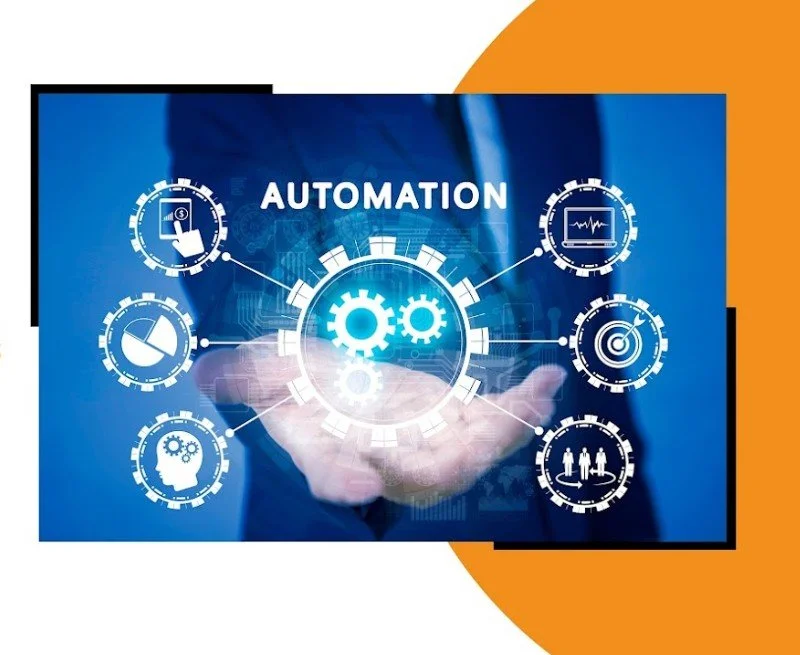
Automation is the second central pillar of AIOps. Routine tasks like patching, log analysis, performance tuning, or resource scaling can now run automatically. This not only ensures higher accuracy but also dramatically reduces response times. Infrastructure becomes self-healing, applications become self-optimizing, and cloud environments automatically balance workloads in response to real-time demand. IT operations become smoother, faster, and more resilient.

However, AIOps isn’t just about machines taking over. It’s about amplifying human expertise. IT teams remain in control, but now they’re supported by intelligent insights, automated workflows, and real-time analytics. This collaboration between humans and AI results in more thoughtful decisions, stronger security posture, and more agile business outcomes.

As companies continue their digital transformation journeys, AIOps is becoming not just a competitive advantage but a necessity. Infrastructure environments, especially multi-cloud and hybrid setups, are growing too complex for manual management. Organizations that embrace AIOps today are positioning themselves for a future where IT systems run more efficiently, adapt faster, and deliver exceptional user experiences.

The next wave of innovation is already emerging: context-aware automation, generative AI-powered troubleshooting, and AI-enhanced DevOps pipelines. These advancements will further reshape how businesses approach performance monitoring, incident management, and service delivery.

AIOps isn’t just an upgrade; it’s a fundamental shift in how we manage technology. And as automation and AI continue to evolve, the organizations that integrate them early will stay resilient, agile, and ready for the future. Contact The Trevi Group if you need help finding the talent that can handle this for your organization.

The Trevi Group | “Executive Search for Technology Professionals” | www.TheTreviGroup.com

#thetrevigroup #recruitingtrends #informationtechnology #employmenttrends #jobmarket #hiringtrends


Cloud Security Posture Management: A Must-Have for Modern Enterprises

In a world where cloud adoption is no longer optional but essential, organizations face a rapidly expanding attack surface. Data now moves across multi-cloud environments, applications scale instantly, and digital workloads shift by the minute. With this level of complexity, traditional security models simply cannot keep up. This is where Cloud Security Posture Management (CSPM) steps in, not as a luxury, but as a must-have pillar of modern enterprise security.

CSPM is much more than a tool; it’s an intelligent security companion that constantly analyzes, monitors, and strengthens your cloud environment. It works quietly in the background, identifying misconfigurations, policy violations, and vulnerabilities long before they become threats. As cyberattacks grow more sophisticated, enterprises need this kind of always-on visibility to avoid becoming the following headline.

One of the biggest reasons CSPM has become essential is the complexity of the cloud. Today’s companies often operate across AWS, Azure, Google Cloud, and private cloud platforms simultaneously. Each environment has its own security rules, identity settings, and configuration options. Even a single incorrect permission can expose massive amounts of sensitive data. CSPM solves this challenge by giving teams a unified, real-time view of their entire cloud ecosystem, regardless of its size or fragmentation.

But visibility alone isn’t enough. Modern CSPM solutions leverage automation and AI-driven intelligence to detect risks instantly and recommend, or even execute, corrective actions. This reduces the burden on IT teams, limits human error, and drastically shortens response times. Instead of reacting to incidents, enterprises can stay ahead of them.

Another decisive advantage of CSPM is its ability to support compliance at scale. Industries such as healthcare, banking, retail, and manufacturing operate under strict regulations, including HIPAA, PCI-DSS, GDPR, and others. Manually tracking compliance across thousands of cloud resources is nearly impossible. CSPM continuously evaluates your environment against industry standards and instantly highlights gaps, helping organizations avoid penalties and maintain customer trust.

CSPM also plays a crucial role in protecting data from insider threats, identity misuse, and unauthorized access, which are increasingly common in hybrid workforce environments. As employees access corporate resources from various locations and devices, securing identities becomes as essential as securing networks. CSPM integrates with Identity and Access Management (IAM) tools to ensure that only the right users have the correct permissions at the right time.

For industries undergoing digital transformations, such as finance, healthcare, e-commerce, logistics, and energy, CSPM delivers a competitive advantage. It enables organizations to innovate faster without compromising security. With automated monitoring, intelligent alerts, and continuous optimization, teams gain the confidence to deploy new services, scale infrastructure, and adopt new technologies.

In simple terms, CSPM is the backbone of cloud security in 2026 and beyond. It reinforces trust, strengthens resilience, and empowers enterprises to grow without fear. As cyber risks evolve, the organizations that prioritize proactive cloud posture management will be the ones best positioned to thrive in a digital-first world.

If the cloud is the future, then CSPM is the guardian every enterprise needs. Contact The Trevi Group if you need help with your CSPM strategy, plans, and/or talent.

The Trevi Group | “Executive Search for Technology Professionals” | www.TheTreviGroup.com

#thetrevigroup #recruitingtrends #informationtechnology #employmenttrends #jobmarket #hiringtrends #cloudsecurity #security #informationsecurity

IT as a Revenue Driver: Shifting from Cost Center to Growth Engine

For years, IT was viewed as a necessary expense, something companies had to fund to “keep the lights on.” But that mindset is rapidly fading. Today, the organizations winning in competitive markets are those that treat IT as a strategic engine for revenue, not an operational burden. Modern industries, from manufacturing and logistics to healthcare, finance, retail, and professional services, are discovering that technology is no longer just a tool. It’s a catalyst for innovation, customer engagement, and long-term profitability.

The shift begins with mindset. Instead of asking, “How do we reduce IT costs?”, high-growth organizations ask, “How can IT create new value?” That subtle change opens the door to more innovative investments, AI-driven analytics, automation, cloud computing, cybersecurity, and digital customer experiences that directly impact revenue.

Take manufacturing, for example. Plants using predictive maintenance and IoT are slashing downtime, boosting output, and entering new markets with confidence. In healthcare, digital patient-care systems and secure telehealth platforms are unlocking new service lines. Retailers using AI and automation are improving personalization, driving higher conversion rates, and elevating brand loyalty. Finance leaders are transforming customer acquisition through frictionless mobile banking and intelligent fraud detection. Across every industry, IT is now deeply tied to how companies sell, scale, and compete.

Another critical ingredient is that organizations that treat data as an asset rather than a by-product gain a decisive advantage. Real-time insights help leaders make faster decisions, forecast demand, and identify new opportunities before competitors do. When IT enables departments to access clean, connected, and meaningful data, teams become more efficient, more innovative, and more profitable.

Cybersecurity also plays a pivotal role in the revenue conversation. A breach can instantly halt operations, damage trust, and cause millions in losses. Forward-thinking companies view cybersecurity not just as protection, but as a competitive differentiator. When customers trust a brand with their information, engagement and revenue naturally follow.

However, becoming a proper IT-driven organization requires alignment. Technology teams must collaborate with sales, marketing, operations, HR, and finance. When IT understands business goals and business units understand capabilities, innovation accelerates. New digital products are launched faster. Customer experiences become smoother. Teams become more agile and resilient.

The final step is leadership. Companies that elevate CIOs and technology strategists to the executive table gain a more precise digital roadmap. These leaders help the business shift from reactive support to proactive growth planning. Instead of merely maintaining infrastructure, IT becomes a champion for transformation, ready to experiment, automate, optimize, and reinvent.

As industries continue to evolve, the question is no longer whether IT should drive revenue but how quickly organizations can embrace the change. Those who view technology as a growth engine will outpace competitors, adapt to shifting market demands, and build future-ready enterprises.

IT is no longer just about systems. It’s about strategy, speed, and brilliant execution. And the companies that recognize this transformation aren’t just surviving, they’re thriving. Contact The Trevi Group today if you need help finding the talent needed to successfully handle that transformation.


The Trevi Group | “Executive Search for Technology Professionals” | www.TheTreviGroup.com

#thetrevigroup #recruitingtrends #informationtechnology #employmenttrends #jobmarket #hiringtrends

Why Network Documentation Is Failing Enterprises And How to Fix It

In an era where digital operations drive every department, you would expect network documentation to be one of the most polished, maintained, and strategic assets inside an organization. Yet for many enterprises, documentation is the weakest link in the entire IT ecosystem. It’s outdated, scattered across multiple platforms, written in inconsistent formats, and often becomes a “forgotten artifact” rather than a living operational guide.

The problem isn’t that IT teams don’t care about documentation. The problem is that most enterprises still treat documentation as a one-time task rather than a continuously evolving system that must keep pace with rapid cloud adoption, hybrid architectures, and accelerating security demands.

The Hidden Reasons Documentation Is Falling Apart

1. Speed Is Outrunning Structure
Modern networks evolve daily, with new SaaS tools, expanded VLANs, cloud integrations, and microservices. While engineers are busy keeping systems running, documentation gets pushed to “when there’s time,” which rarely exists. By the time updates are added, half the information is already obsolete.

2. Documentation Lives Everywhere… and Nowhere
Spreadsheets in someone’s OneDrive. Old Visio diagrams. Notes in ticketing tools. PDFs buried in shared drives. When documentation is scattered across 6–7 different systems, accuracy becomes impossible, and onboarding becomes painful.

3. Tribal Knowledge Is Still the Default System
Many enterprises still rely on “the person who knows everything.” When key engineers leave, retire, or change teams, critical network knowledge walks out the door.

4. Cloud Growth Has Outpaced Documentation Tools
Traditional documentation practices were built for on-prem networks. Cloud platforms update automatically, scale dynamically, and require visibility across APIs, not manual note-taking.

Why This Is Dangerous for Modern Enterprises

Poor documentation isn’t just inconvenient, costly, and risky:

  • Longer incident resolution times

  • Higher downtime impact

  • Increased security vulnerabilities

  • Slower onboarding for engineers

  • Inaccurate network maps during audits or compliance reviews

A single outdated IP list or missing topology detail can stall operations, delay deployments, or cause preventable outages.

How Enterprises Can Finally Fix Documentation

1. Move from “Static Docs” to “Living Documentation.”
Documentation must be automatically updated or tied to workflows that rely on memory or manual edits. Integrations that sync with network devices, cloud accounts, and monitoring tools help maintain real-time accuracy.

2. Centralize Everything in One Source of Truth
A unified, accessible, searchable, and standardized documentation platform eliminates chaos. Whether diagrams, credentials, inventories, runbooks, or topology maps, everything should exist in a single, secure hub.

3. Automate Wherever Possible
Automation removes human error and ensures consistency. APIs, discovery tools, and auto-generated topology mapping can keep documentation continuously up to date.

4. Make Documentation a Culture, Not a Task
Documentation should be part of workflows: change management, onboarding, handoffs, and incident reviews. When it becomes a habit, not an afterthought, it stays accurate.

5. Prioritize Human-Readable Content
Use simple language, visual diagrams, and standardized templates. Documentation isn’t meant to be a maze; it’s meant to guide.

The Bottom Line

Enterprises don’t struggle with documentation because it’s an unimportant struggle. After all, traditional methods cannot keep up with modern networks. The solution isn’t more spreadsheets or reminders; it’s more intelligent systems, centralized platforms, and a culture that treats documentation as a strategic advantage.

When documentation becomes living, automated, and accessible, enterprises gain stronger security, faster troubleshooting, and more confident IT teams, precisely what a modern infrastructure demands.

The Trevi Group | “Executive Search for Technology Professionals” | www.TheTreviGroup.com

#thetrevigroup #recruitingtrends #informationtechnology #jobmarket #hiringtrends #networkengineer

Cybersecurity’s Real Shortage: Strong Leaders Who Understand Tech

If you’ve got your finger on the pulse of digital recruitment, you’ll know that the cybersecurity workforce shortage is a serious issue. Skills gaps are putting organizations at risk as increasingly sophisticated cyberattacks place a growing burden on already stretched cybersecurity teams. At least four million cybersecurity roles remain unfilled, while rates of cybercrime continue to soar.

Cybersecurity workforce development is one solution, but there could be another: investing in tech-savvy leaders who instill the importance of cybersecurity at all levels of their organization. 

Current Cybersecurity Workforce Landscape

Cybersecurity skills gaps continue to be problematic. Different sources give different figures for the size of the talent gap, but it’s at least four million, with USA-based organizations attempting to recruit over half a million new cybersecurity professionals in the last 12 months.

Challenges include rapidly advancing technologies, such as AI, and economic uncertainties that mean candidates are less likely to look for something new. Businesses may simply not have the budget to attract and retain top talent who can demand high salaries.

The Leadership Bottleneck

Cybersecurity talent acquisition has to be a top priority for leaders across all industries, yet some leaders are failing to take the right actions to bring cybersecurity talent to their organization. They’re creating a bottleneck — even where candidates are available, poor leadership is causing them to apply elsewhere.

Just look at some of these figures:

Organizational leaders who fail to address these issues could be creating their own internal security risks by driving away skilled talent.

Consequences of Leadership Deficiencies

Turning talent away isn’t the only issue. In cybersecurity, leadership challenges range from employing executives with zero tech experience to tech experts with minimal leadership skills. We recently discussed the importance of prioritizing tech fluency as a C-suite imperative. Cybersecurity workforce management requires leaders who understand the foundational concepts of the work their teams do. Similarly, tech leaders must have relevant leadership skills as well as technical know-how. 

Without this balance, organizations are at a much higher risk of data breaches and attacks. Research shows that 58% of cyber professionals believe that skills gaps place organizations at significant risk of cyberattack, while firms with significant cyber talent gaps are twice as likely to fall victim. Leaders not taking the right steps to address these skills gaps are effectively putting their entire organization at risk. This impacts overall morale and places existing cyber professionals under unreasonable amounts of pressure.

Strategies for Leadership Improvement

Cybersecurity leadership development can start with internal leadership development programs. Rather than hiring from untested talent pools, coaching and developing existing, loyal employees could create highly invested leaders with the know-how to quickly assess where more resources or personnel are required.

Investing in leadership development programs is more effective when organizations focus on formal training and transferable, strategic skills and certifications.

Key cybersecurity leadership skills should include: 

  • Communication

  • Collaboration

  • Cybersecurity-specific skills

  • Inclusivity

  • Strategic planning

  • Adaptability

Leaders should also be encouraged to be open to new ways of hiring. Cybersecurity leaders who sign off on social media-based hiring techniques, partnering with educational institutions, and working with specialist recruitment partners could ensure their organization stays secure while edging ahead of competitors.

Cybersecurity Leadership Development and Recruitment: Unlocking Success

Are you working on your cybersecurity workforce strategy? Investing in the right tech leadership team could be your first critical step. When leaders understand the importance of building, developing, and supporting a thriving cybersecurity workforce, it makes the whole organization more security aware — and could encourage competing organizations to change their approach to cyber hiring.

Connect with The Trevi Group and work with expert talent solutions specialists to upgrade your cybersecurity professional hiring strategy.

The Trevi Group | “Executive Search for Technology Professionals” | www.TheTreviGroup.com

#thetrevigroup #recruitingtrends #informationtechnology #employmenttrends #jobmarket #hiringtrends #cybersecurity

Cloud Cost Optimization in the Age of AI: Tools, Metrics, and ROI Strategies

The cloud has become the backbone of digital innovation — especially as artificial intelligence (AI) continues to reshape how businesses operate, scale, and compete. Yet, as organizations expand their cloud footprint to support data-heavy AI workloads, one challenge has taken center stage: cost control.

Cloud cost optimization isn’t just about cutting expenses; it’s about maximizing performance, predictability, and return on investment (ROI) without compromising agility or innovation. In the age of AI, smarter cost management is a competitive advantage.

1. The AI Impact on Cloud Spending

AI workloads are data-intensive, compute-heavy, and often unpredictable. Training models, running analytics, and managing continuous inference pipelines can quickly inflate cloud bills.
A single generative AI deployment can consume thousands of GPU hours and terabytes of storage — and without proper oversight, cloud costs can spiral.

As enterprises scale AI adoption, they’re realizing that traditional cost governance no longer works. Optimization now requires real-time visibility, intelligent automation, and a deep understanding of how each workload drives business value.

2. Establishing Visibility: The Foundation of Cost Control

You can’t optimize what you can’t see.
Modern FinOps (Financial Operations) frameworks focus on giving finance, engineering, and operations teams shared visibility into cloud spend. By unifying cost data across AWS, Azure, and Google Cloud, companies gain the transparency needed to make data-driven decisions.

Key tools that enable visibility include:

  • CloudHealth by VMware – provides detailed spend analytics and governance dashboards.

  • AWS Cost Explorer & Savings Plans Advisor – tracks usage trends and recommends right-sizing or reserved instance purchases.

  • Google Cloud Cost Intelligence – connects usage data directly to projects and business units.

Clear visibility turns cloud cost management from guesswork into strategic decision-making.

3. Key Metrics That Matter

The right metrics are essential to identify inefficiencies and measure improvement. The most effective organizations monitor a mix of financial and operational KPIs, such as:

  • Cost per workload or application – isolates high-cost environments.

  • Cost per customer transaction – aligns spend with revenue performance.

  • Utilization rate – ensures resources aren’t underused.

  • Elasticity ratio – measures how effectively scaling matches demand.

  • Unit economics for AI models – tracks the cost of training and inference relative to output or accuracy.

These metrics reveal not just where money is going, but how it contributes to business outcomes.

4. Smart Tools for Cloud Optimization

In 2025, cloud optimization is powered by AI itself. Leading platforms now use machine learning to detect anomalies, predict demand, and recommend cost-saving actions automatically.

Top solutions include:

  • Apptio Cloudability – automates allocation and budget forecasting for complex multi-cloud environments.

  • Kubecost – provides real-time visibility into Kubernetes cluster expenses.

  • Harness Cloud Cost Management – integrates continuous delivery pipelines with cost controls.

  • Spot by NetApp – dynamically provisions and scales compute based on performance requirements and pricing models.

By combining automation with accountability, these tools help enterprises reduce waste and reinvest savings into innovation.

5. Rightsizing and Scaling Strategies

Rightsizing — adjusting compute, storage, and network resources to match actual needs — is one of the fastest paths to savings.
However, in AI-heavy environments, workloads fluctuate dramatically between training and production phases. Dynamic scaling policies and serverless architectures allow businesses to pay only for what they use, without sacrificing performance.

Additionally, reserved instances and spot instances remain effective cost levers when managed intelligently through automated policies.

6. Building a FinOps Culture

True optimization isn’t achieved through tools alone — it requires a cultural shift.
FinOps practices promote collaboration between finance and IT, ensuring every team understands how their cloud decisions impact profitability. Regular reporting, budget alerts, and ROI reviews create shared accountability.

By fostering this mindset, organizations transform cloud cost management from a reactive function into a strategic capability that drives innovation responsibly.

7. Measuring ROI and Continuous Improvement

Cost optimization is not a one-time project — it’s an ongoing discipline.
Track the return on every optimization initiative, whether it’s through reduced waste, improved utilization, or faster time-to-market. Reinvest those savings into AI innovation, product development, or digital transformation.

Continuous improvement is the hallmark of cloud maturity — and the key to turning cost efficiency into business agility.

Conclusion

As AI reshapes industries, cloud infrastructure will continue to expand — and so will the need for smarter, data-driven cost control.
Organizations that embrace visibility, automation, and financial discipline will not only reduce expenses but also strengthen their ability to innovate sustainably.

In the age of AI, cloud cost optimization isn’t just a technical exercise — it’s a strategic differentiator. By aligning cloud spending with business value, enterprises position themselves for long-term growth, efficiency, and innovation. Contact The Trevi Group if you need resources that will be able to handles these needs.

The Trevi Group | “Executive Search for Technology Professionals” | www.TheTreviGroup.com

#thetrevigroup #recruitingtrends #informationtechnology #employmenttrends #jobmarket #hiringtrends #cloud #AI